
Interior & Exterior Painting
Painting
Read more403 Navaho Dr, Frederick, MD 21701

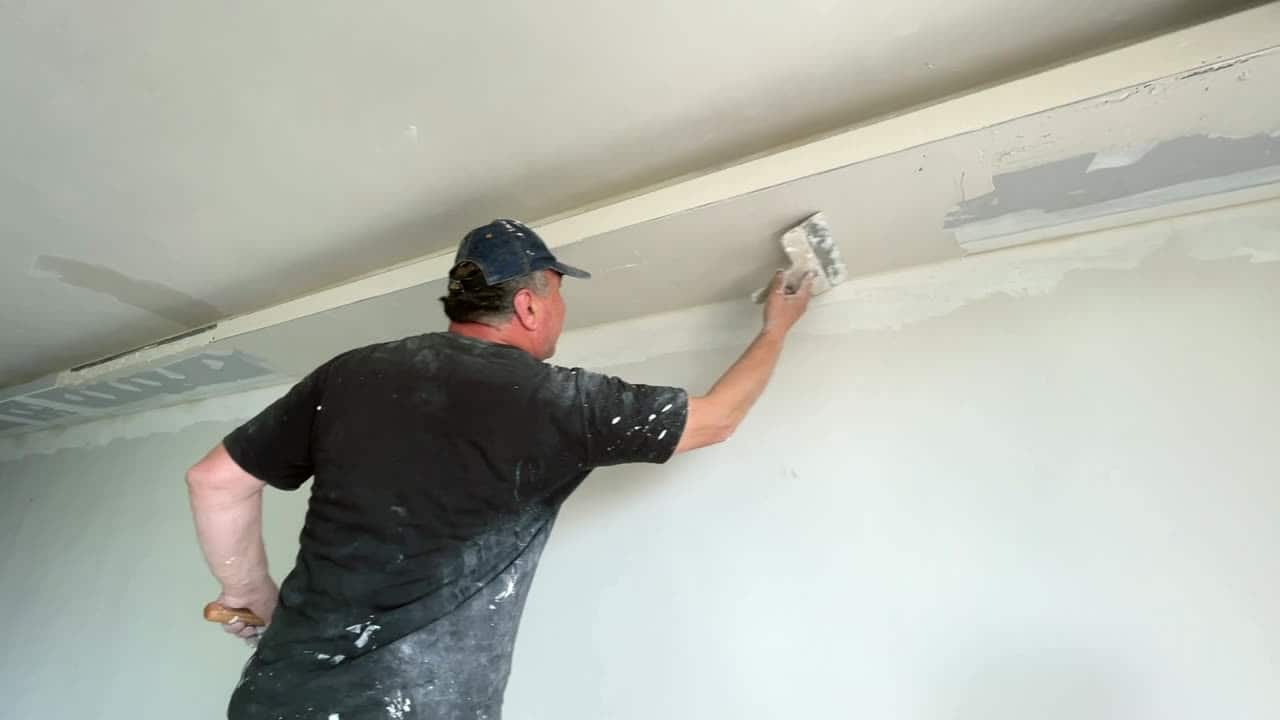
Finishing costs in Maryland
A ceiling is the least forgiving surface in a house. It is lit from the side, nobody can hide it behind furniture, and every repair on it is slower than the same repair on a wall. Here is what that costs.
Quick answer
Ceiling repair in Maryland typically costs $220 to $580 per visit for a small patch or crack, $260 to $700 to refasten a sagging area, and $180 to $420 per sheet where board has to come out and go back. Blocking and skimming a water stain runs $190 to $480. Re-texturing a whole ceiling is $1.60 to $3.20 per square foot, and a level 5 skim on a ceiling is $2.20 to $4.00. Most small ceiling repairs are priced per visit rather than per square foot, because finding the cause and getting safe access is most of the work.
The numbers
Almost no contractor site in this market publishes a number, which is exactly why the question has so much search demand and so little honest supply. These are the ranges we price to in Maryland, with the reason each one is a range and not a price.
Typical in Maryland
Small ceiling patch or crack
$220 – $580 per visit
$220 – $580 per visit
One visit covers several small defects in the same room. The reason this is a visit price and not a square-foot price is that setup, access and the texture match do not scale down below a certain floor.
$260 – $700
Screws into the joists on a proper pattern, then taped and finished. Only honest where the board itself is sound — sagging that has been wet needs replacing, not refastening, and we will say which one it is.
$180 – $420 per sheet
Cut out, new board hung, taped, finished and textured to match. Overhead hanging is slower than wall hanging and needs two people, which is most of the difference from a wall sheet.
$190 – $480
Only worth doing once the leak is fixed and the cavity is dry. A stain-blocking primer and a skim is the correct repair for a dry stain; over a live leak it is money spent twice.
$1.60 – $3.20 per square foot
The honest answer when a repair cannot be hidden in an old texture. Re-texturing the whole plane is often cheaper than three attempts at matching it, and it always looks better.
$2.20 – $4.00 per square foot
A flat, fully skimmed ceiling. The right answer under a window wall or where recessed lighting grazes the surface. Higher than the same finish on a wall because the whole job is worked overhead.
+$150 – $450 per visit
Staging over a stairwell or a two-storey entry is slow to build and slower to work from safely. We quote these after seeing them rather than over the phone.
$45 – $120 each
Taking a fixture down and rehanging it, not rewiring it. If the fitting needs changing rather than moving, that is an electrician, and we will say so rather than doing it.
$0.70 – $1.40 per square foot
Priced for the whole plane, wall to wall, and that is deliberate. Spot-painting a repair on a ceiling almost always shows, because ceiling paint ages and the sheen does not match.
Ranges, not quotes. Published 2026 and reviewed against work we are actually pricing in Maryland. What your job costs comes from a walkthrough — access, condition, height and finish level move a price more than square footage does. Estimates are free and in writing.
Most of the ceilings we are called to look at have a story. Brown rings mean water has been there, and water comes from a roof, a flashing detail, a bathroom above, a supply line or condensation on a duct. Each of those is a different trade and a different cost, and none of them is drywall.
So the first visit is partly diagnostic. We look at what is above the ceiling where we can, check whether the area is still damp, and tell you plainly what we think happened. If the cause is live, the repair waits — a skim coat over a wet cavity will stain through again within weeks, and the mould risk is a separate and more serious problem.
This is also why we do not quote ceiling repairs from a photograph. A photograph shows the stain. It does not show whether the board above it is soft, whether the joint has opened because the structure moved, or whether anything is still dripping.
A repair is visible for one of two reasons: the plane is not actually flat where the feather ends, or the texture does not match. Flatness is a matter of how wide the compound is feathered out — a 12-inch patch feathered over 24 inches disappears, the same patch feathered over 14 inches does not. That width is labour, and it is the most common place a cheap quote saves money.
Texture is the harder one. We make a sample board, spray or apply the pattern, let it set and look at it under a light held flat against the ceiling before touching the actual repair. On a standard orange peel or knockdown that gets us there. On a 40-year-old hand-troweled pattern it sometimes does not, and we will tell you that before taking the work rather than after.
When a match is not achievable, re-texturing the whole ceiling at $1.60 to $3.20 per square foot is a real option and is frequently the cheaper path once you count two failed attempts at matching. A 12 by 14 room is roughly $270 to $540 to re-texture completely, and the result is a uniform ceiling rather than a repaired one.
Before you sign anything
Ask every contractor for these in writing. Quotes only compare once they do — and Maryland law requires home improvement work over $500 to be under a written contract anyway.
Want the number for your house?
Call and describe the job. You’ll get a straight answer on whether it’s something we do and roughly what it runs, before anyone books a visit.
(301) 524-1729
Priced by us, not a calculator
Drywall Finishing & Repair
What moves the number
Usually not because one contractor is expensive. Usually because they are pricing different work. These are the variables that actually move it.
A crack over a doorway from seasonal movement, a nail pop, a sagging run of board and a brown ring are four different problems with four different repairs. We will not patch a stain without establishing that whatever caused it has stopped, because the patch will fail and you will pay twice. That diagnosis is included in the visit, and sometimes the useful outcome is being told to call a roofer first.
A flat ceiling is straightforward. A knockdown or orange-peel texture has to be matched, and matching is a skill with a sample board and a strong side light. Some old hand-applied patterns genuinely cannot be matched invisibly, and in that case the honest options are to accept a visible repair or to re-texture the whole plane. We say which one applies before starting.
Every coat of compound on a ceiling is applied against gravity, from a bench or stilts, with the material trying to come back down. Sanding overhead is slower and far dustier. The same patch costs more on a ceiling than on a wall and anyone who prices them identically has not done many ceilings.
Ceiling repairs are judged under raking light. Recessed lights set close to the plane, or a window wall throwing daylight sideways across it, will reveal a repair that would be invisible under a central fixture. Where the lighting is unforgiving, the correct answer is often a wider feather or a level 5 skim rather than a tighter patch.
Three cracks in one room is one visit. One crack in each of three rooms is three setups, three containments and three clean-ups. If you have a list, have us look at all of it at once — it is substantially cheaper than calling about each one as it annoys you.
On the job
Trade photography, stage by stage — the work these numbers buy. Photos of our own recent jobs come out at the walkthrough, on the actual house.


Straight answers
Not covered here? Call and ask — you’ll get a real answer, not a “depends on the job”.
Blocking and skimming a dry stain runs $190 to $480. If the board is soft, it comes out instead at $180 to $420 per sheet. Neither number is worth spending until the leak is fixed, which is why our first visit is partly a diagnosis and sometimes ends with us telling you to call a roofer or a plumber first.
Because everything is done overhead. Compound is applied against gravity, sanding is slower and much dustier, access needs a bench or stilts, and hanging board needs two people. The work itself is the same trade; the time is not. A ceiling also gets judged under side light, which means wider feathering.
Standard orange peel and knockdown, yes, and we make a sample board first and check it under a raking light before touching the ceiling. Old hand-applied patterns sometimes cannot be matched invisibly. Where that is the case we say so before starting, and re-texturing the whole plane at $1.60 to $3.20 per square foot is usually the better value than repeated attempts.
Almost always, yes, and we price it for the whole plane at $0.70 to $1.40 per square foot. Existing ceiling paint has aged and its sheen has changed, so a spot of fresh paint over a repair reads as a patch even when the drywall work underneath is invisible.
It depends entirely on why it is sagging. Board that was under-screwed and has crept is a finishing problem and refastens for $260 to $700. Board that is sagging because it got wet has lost strength and needs replacing. If an area is sagging noticeably, bowing between joists or feels soft, keep people out from under it and call us to look at it rather than waiting.
While the crew is there

Talk to the people doing the work
Tell us what needs doing. We’ll walk it with you, sequence every trade it touches, put the price in writing, and leave you to decide.
Get a quote
Two short steps. No obligation, no pressure — just a clear number and a straight answer about what the job involves.


Tick as many as you like. Most jobs are two or three of them at once, and I sort out the detail when I come and look. Nobody gets turned away for choosing the wrong box.


