
Paver Patios & Walkways
Pavers
Read more403 Navaho Dr, Frederick, MD 21701

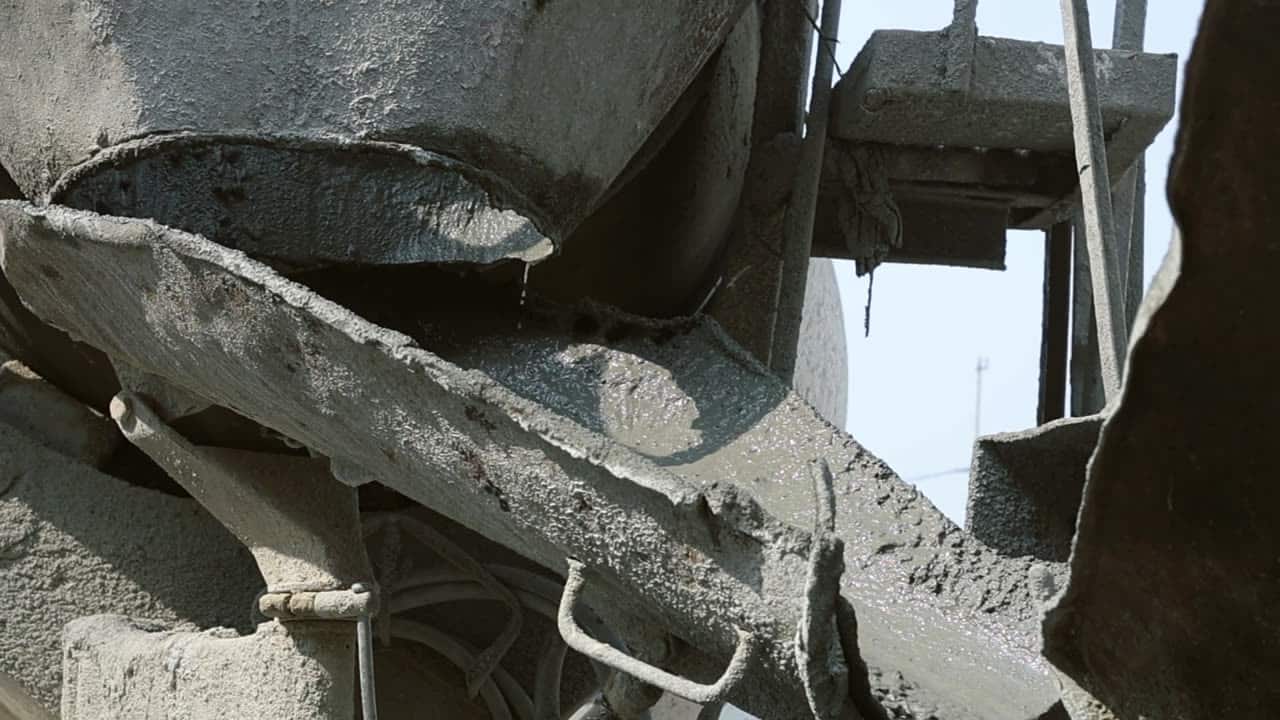
Concrete costs in Maryland
Per square foot for plain, stamped and decorative — and why what happens under the slab, before any concrete arrives, is what you are really buying in this climate.
Quick answer
Concrete in Maryland typically costs $8 to $15 per square foot for a plain patio or walkway, $8 to $18 per square foot for a driveway, and $15 to $25 per square foot for stamped or decorative finishes. A standard two-car driveway of roughly 600 square feet commonly runs $5,000 to $11,000. Subgrade preparation, slab thickness and reinforcement are what determine whether it lasts through Maryland freeze-thaw cycles.
The numbers
Almost no contractor site in this market publishes a number, which is exactly why the question has so much search demand and so little honest supply. These are the ranges we price to in Maryland, with the reason each one is a range and not a price.
Typical in Maryland
Concrete driveway
$8 – $18 / sq ft
$8 – $15 per square foot
Broom finish, 4 inches, standard grey. The low end assumes good access, level ground and a straightforward pour.
$8 – $18 per square foot
Priced above a patio because a driveway carries vehicle loads — thicker slab, more reinforcement, more subgrade work.
$15 – $25 per square foot
Pattern, colour and release, then sealed. The finish is applied in a narrow window while the concrete is workable, which is why it prices on skill.
$12 – $20 per square foot
A middle option. More interesting than a plain broom finish, far less than full stamping, and it hides surface wear better than either.
+$2 – $5 per square foot
The Maryland line item. Piedmont clay holds water, heaves when it freezes and needs a compacted stone base under the slab.
$3 – $8 per square foot
Breaking, loading and hauling. Reinforced slabs and anything over 6 inches sit at the top; disposal weight is a real cost.
+$1.50 – $3.50 per square foot
Worth it wherever a truck, a trailer or an RV will ever park. Cheap now, impossible later.
+$0.75 – $2.00 per square foot
Mesh that ends up lying on the subgrade does nothing. Rebar on chairs stays where it is supposed to be. See the section below.
+$0.50 – $1.50 per square foot
Air entrainment is not cosmetic in this climate — it is what gives the concrete somewhere to expand when water in it freezes.
$0.50 – $1.50 per square foot
Applied after the concrete has cured, not on day one. Re-applied every two to three years in Maryland.
$350 – $900 per step
Formed, poured and finished individually. Steps price on their own, never per square foot.
$900 – $4,000
If water currently runs toward the house, the new slab will do it faster and better. Fix the water before you pour over it.
Ranges, not quotes. Published 2026 and reviewed against work we are actually pricing in Maryland. What your job costs comes from a walkthrough — access, condition, height and finish level move a price more than square footage does. Estimates are free and in writing.
Three things account for nearly every failed slab we are called out to look at: no compacted stone base, reinforcement lying on the ground rather than held up in the slab, and control joints cut too shallow or too late.
The base is the one to insist on. Ask what depth of crushed stone goes down, and whether it will be compacted in lifts. On Maryland clay we would not pour a driveway on less than four inches of properly compacted stone, and more on ground that holds water. That is the $2 to $5 per square foot subgrade line, and it is the least glamorous, highest-value money in the whole job.
On reinforcement: wire mesh only works if it is in the middle third of the slab. Mesh rolled out on the subgrade and walked on during the pour ends up at the bottom, doing nothing. Rebar on chairs cannot go anywhere. If a quote says mesh, ask how it will be supported.
On air entrainment: any exterior concrete in a freeze-thaw climate should be an air-entrained mix. The microscopic air voids give freezing water somewhere to expand into instead of spalling the surface off. It is a mix specification and it costs very little; ask for it in writing.
Concrete costs less up front. A plain patio at $8 to $15 a square foot against pavers at $18 to $40 is not a close comparison on day one, and for a driveway the gap is wider still.
Pavers win on two things. They flex — individual units move with the ground rather than cracking across it, which matters on clay that heaves. And they are repairable: a stained, cracked or sunken area is lifted and reset, and it disappears. A cracked concrete slab is a cracked concrete slab for the rest of its life, and patching is always visible.
Concrete wins on cost, on being a genuinely seamless surface, and on maintenance — no joint sand to top up, nothing growing between units. Stamped concrete gets much of the appearance of pavers for meaningfully less, at the cost of the flexibility and the repairability.
The practical rule we give people: if the budget is the constraint, concrete. If the ground is wet, moves, or the area is going to be a focal point you want to still look right in fifteen years, pavers. Both are legitimate answers and we install both — see the paver patio cost guide for the other side of the number.
Before you sign anything
Ask every contractor for these in writing. Quotes only compare once they do — and Maryland law requires home improvement work over $500 to be under a written contract anyway.
Want the number for your house?
Call and describe the job. You’ll get a straight answer on whether it’s something we do and roughly what it runs, before anyone books a visit.
(301) 524-1729
Priced by us, not a calculator
Concrete
What moves the number
Usually not because one contractor is expensive. Usually because they are pricing different work. These are the variables that actually move it.
The most important thing on this page and the one that never shows in a photograph. Concrete does not fail because the concrete was bad; it fails because what it was sitting on moved. That means the topsoil stripped out, a compacted crushed-stone base laid to a consistent depth, and the base actually compacted rather than raked level.
Piedmont clay soil holds water instead of draining it, and this region runs through dozens of freeze-thaw cycles between December and March. Water in the ground under a slab expands every time it freezes. A properly drained stone base gives that water somewhere to go; a slab poured straight onto clay does not, and the crack that appears in year three was decided before the truck arrived.
Four inches is standard for a patio or a walkway. A driveway carrying a normal car is fine at four with proper base and reinforcement; anywhere a truck, trailer, RV or dumpster will sit wants five or six. Reinforcement matters less for preventing cracks than for holding the two sides of a crack together and level when one eventually forms.
Concrete will crack. That is not a defect, it is a material property — it shrinks as it cures. Control joints are a decision about where it cracks: cut to the right depth (a quarter of the slab thickness), on the right spacing, and cut early enough. A slab with too few joints or shallow ones cracks where it likes, usually diagonally across the most visible part.
A concrete truck that can reach the pour is the cheap version. A backyard patio behind a house with no side access means pumping, wheelbarrowing or a conveyor, and that is a real line item — sometimes a thousand dollars or more before any concrete is placed.
On the job
Trade photography, stage by stage — the work these numbers buy. Photos of our own recent jobs come out at the walkthrough, on the actual house.


Straight answers
Not covered here? Call and ask — you’ll get a real answer, not a “depends on the job”.
Typically $8 to $18 per square foot, so a standard two-car driveway of around 600 square feet runs roughly $5,000 to $11,000. Tear-out of an existing driveway adds $3 to $8 per square foot on top, and clay-soil subgrade work another $2 to $5 — both of which are legitimate and both of which are sometimes missing from the cheapest quote.
It will develop cracks; every slab does, because concrete shrinks as it cures. The question is whether they happen where they were designed to — in the control joints — or somewhere you have to look at. Proper base, correct reinforcement position, and control joints cut to a quarter of the slab depth at the right spacing are what decide that.
Foot traffic after 24 to 48 hours, cars after about seven days, and heavy vehicles not until 28 days. That schedule is not padding — concrete reaches most of its design strength over 28 days, and driving on it early is a good way to buy a cracked driveway. In a Maryland summer the concrete also needs to be kept damp for the first days rather than left to bake.
Aesthetically it is a large step up from a broom finish for $7 to $10 more per square foot, which is much less than pavers. The trade-off is maintenance: stamped concrete needs resealing every two to three years in this climate to keep the colour, and if it cracks the repair is visible in a way a plain broom finish's is not. On a patio where appearance matters, most people find it worth it. On a driveway that takes road salt every winter, we would think harder about it.
It varies by jurisdiction and it usually turns on size, location and whether it changes drainage or lot coverage. A patio at grade often does not need one; a driveway that alters a public right-of-way entrance almost always does, and anything in a floodplain or a critical area has its own rules. Your county permit office is the authority — and HOA approval is a separate question that catches people out more often than the county does.
While the crew is there

Talk to the people doing the work
Tell us what needs doing. We’ll walk it with you, sequence every trade it touches, put the price in writing, and leave you to decide.
Get a quote
Two short steps. No obligation, no pressure — just a clear number and a straight answer about what the job involves.


Tick as many as you like. Most jobs are two or three of them at once, and I sort out the detail when I come and look. Nobody gets turned away for choosing the wrong box.


