
Non-Structural Wood Framing
Wood Framing
Read more403 Navaho Dr, Frederick, MD 21701

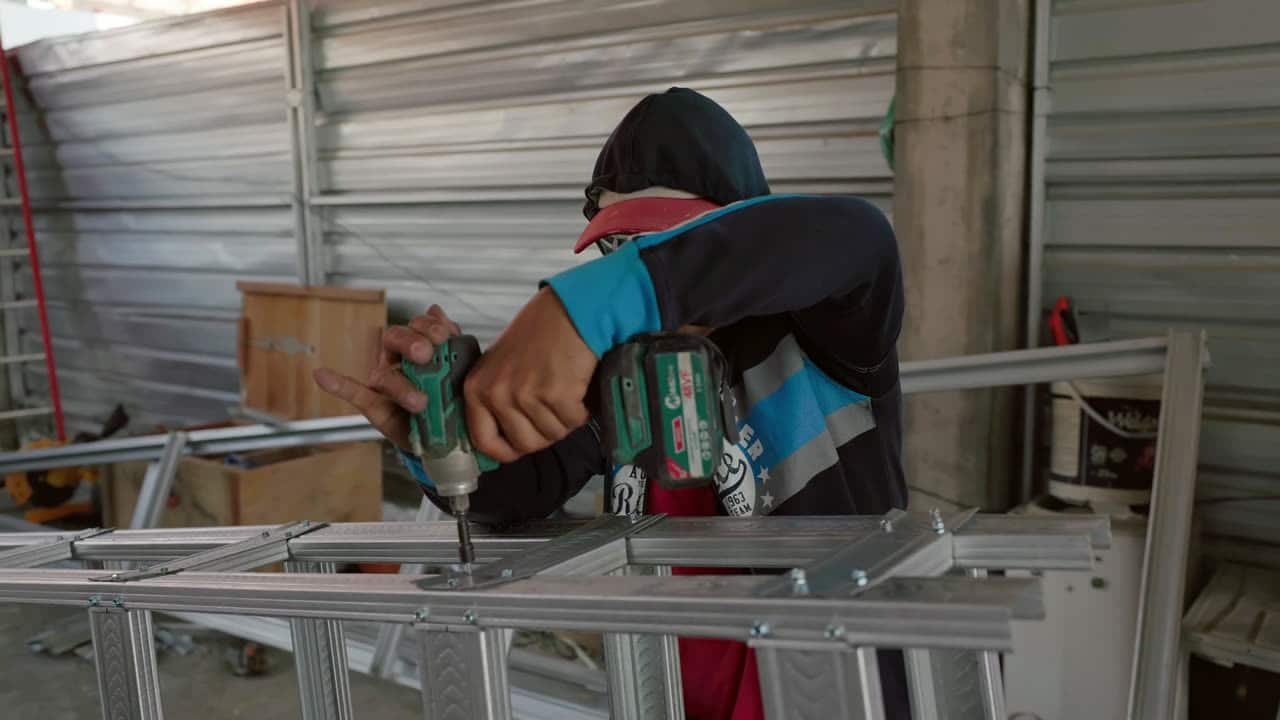
Metal Framing costs in Maryland
Framing and boarding are two stages that most people buy from two contractors. Priced together, with one crew doing both, the number is lower and the blame has nowhere to go. Here is what it costs in Maryland.
Quick answer
Metal stud framing with drywall by the same crew costs $9 to $17 per square foot in Maryland. A basement framed and boarded runs $9 to $16 per square foot of finished floor area. Individual metal stud partitions are priced by the wall at $14 to $32 per linear foot, and a single-layer fire-rated partition runs $12 to $26 per linear foot.
The numbers
Almost no contractor site in this market publishes a number, which is exactly why the question has so much search demand and so little honest supply. These are the ranges we price to in Maryland, with the reason each one is a range and not a price.
Typical in Maryland
Framing plus drywall, same crew
$9 – $17 / sq ft
$9 – $17 per square foot
The combined rate for both stages. The low end is open space with few corners; the high end is a plan with several rooms, a bathroom, soffits and a level-five finish.
$9 – $16 per square foot
Measured on finished floor area rather than wall area, which is how basements are normally budgeted. Includes furring the foundation walls and framing the interior partitions.
$8,100 – $14,400
The rate above applied to a common Frederick County basement footprint, so you have a whole number to compare quotes against rather than only a rate.
$14 – $32 per linear foot
For individual walls rather than a whole build-out. Priced by the length of the wall at standard ceiling height; a tall wall or a wall boarded on one side only moves within this range.
$12 – $26 per linear foot
A tested assembly with one layer of rated board each side. Reads lower per foot than a standard partition at the top of its range because rated walls are usually long and simple.
$18 – $38 per linear foot
Where the assembly calls for two layers each side. Twice the board, twice the finishing of joints, and the second layer has to be offset from the first to hold the rating.
+$1.50 – $3.50 per square foot
A skim across the whole surface rather than just the joints. Worth buying where raking light crosses a long wall, and worth skipping in a storage room.
+$0.60 – $1.40 per square foot
Applies to bathrooms, laundry rooms and anywhere below grade with a known damp history. It is a small number and it is the wrong place to economise.
Included
Solid backing behind every position that will eventually carry weight — televisions, cabinets, grab bars, handrails. Included because asking for it after the board is on costs real money.
Ranges, not quotes. Published 2026 and reviewed against work we are actually pricing in Maryland. What your job costs comes from a walkthrough — access, condition, height and finish level move a price more than square footage does. Estimates are free and in writing.
Steel does not rot, does not feed mould and does not warp, which is why it is the better choice against a foundation wall or anywhere below grade with a damp history. In a Maryland basement that matters more than it does upstairs, because the wall behind the framing is the outside of the house.
Steel is also straighter out of the bundle and stays straighter, which is why a long metal-framed wall takes a level-five finish better than a long wood-framed one. If you are spending money on a skim coat, framing in steel protects that spend.
Wood is still right for anything carrying load, and we say so plainly. Non-structural partitions, furring and soffits are a good fit for steel; a bearing wall, a header or a floor opening belongs in lumber with an engineer where the load calls for one. Our basement framing cost guide covers the wood side of the same work.
A fire-rated assembly is a tested system. Somebody built that exact wall — that stud gauge at that spacing, that number of board layers, that screw pattern, that treatment at the top and bottom track — put it in a furnace and timed it. Change any part and the number on the drawing no longer describes the wall you have.
That is why a rated partition at $12 to $26 per linear foot, or $18 to $38 for a two-layer version, has very little room in it. The expensive parts are not optional: the right board, the right fasteners at the right spacing, offset joints on the second layer, and penetrations treated so the rating survives the plumber and the electrician.
The common failure is not in the building, it is afterwards. A rated wall gets a recessed light cut into it, or a waste pipe pushed through, and the assembly is finished. We document which assembly was built so that whoever opens the wall in five years can see what they are standing in front of.
Before you sign anything
Ask every contractor for these in writing. Quotes only compare once they do — and Maryland law requires home improvement work over $500 to be under a written contract anyway.
Want the number for your house?
Call and describe the job. You’ll get a straight answer on whether it’s something we do and roughly what it runs, before anyone books a visit.
(301) 524-1729
Priced by us, not a calculator
Metal Stud Framing
What moves the number
Usually not because one contractor is expensive. Usually because they are pricing different work. These are the variables that actually move it.
The combined rate is lower than framing and drywall bought separately, and not only because of margin. One crew means the framing is set up for the boarding, the blocking is already where the board needs it, and nobody arrives to find the previous trade left a problem.
Rate per square foot hides the real driver, which is corners. An open rec room is cheap per foot. The same footage cut into a bedroom, a bathroom, a mechanical closet and a hallway has four times the corners, and corners are where both framing and finishing time goes.
A rated wall is not a normal wall with better board. It is a tested assembly, and every part of it — stud gauge, spacing, board layers, fastener pattern, the way penetrations are treated — has to match the tested version or the rating is not there.
Level four is the standard and is right for most rooms. Level five adds $1.50 to $3.50 per square foot and is the right answer on long walls with a window at one end, where a standard finish will show every joint in the afternoon.
Steel studs and board have to physically get to where they are going. A walk-out basement is easy. A finished house with one narrow stair, a turn at the bottom and carpet to protect is slower, and that is labour rather than material.
On the job
Trade photography, stage by stage — the work these numbers buy. Photos of our own recent jobs come out at the walkthrough, on the actual house.


Straight answers
Not covered here? Call and ask — you’ll get a real answer, not a “depends on the job”.
Nine to seventeen dollars per square foot with one crew doing both stages. A whole basement is $9 to $16 per square foot of finished floor area, which on a 900 square foot basement is $8,100 to $14,400. Individual partitions are $14 to $32 per linear foot.
Yes, and the saving is real rather than a discount. One crew sets the framing up for the boarding, puts the blocking where the board needs it, and carries the responsibility for both stages. Two contractors means two mobilisations and a seam between them.
A single-layer rated partition is $12 to $26 per linear foot and a two-layer one is $18 to $38. The cost is board layers and the care taken at joints and penetrations, not a premium on the studs. Our metal stud framing cost guide breaks the framing-only figures out separately.
No, and paying for it everywhere is waste. Level four is right for most rooms. Spend the $1.50 to $3.50 per square foot on long walls with a window at one end and on any wall you plan to paint a dark colour, because those are where a standard finish shows.
It does not rot, warp or feed mould, which matters when the wall behind it is the outside of the house. It is also straighter, so it holds a flat finish better on long walls. For anything carrying load we still frame in wood, and we will say which is which on the quote.
While the crew is there

Talk to the people doing the work
Tell us what needs doing. We’ll walk it with you, sequence every trade it touches, put the price in writing, and leave you to decide.
Get a quote
Two short steps. No obligation, no pressure — just a clear number and a straight answer about what the job involves.


Tick as many as you like. Most jobs are two or three of them at once, and I sort out the detail when I come and look. Nobody gets turned away for choosing the wrong box.


