


Interior & Exterior Painting
Painting
Read more403 Navaho Dr, Frederick, MD 21701

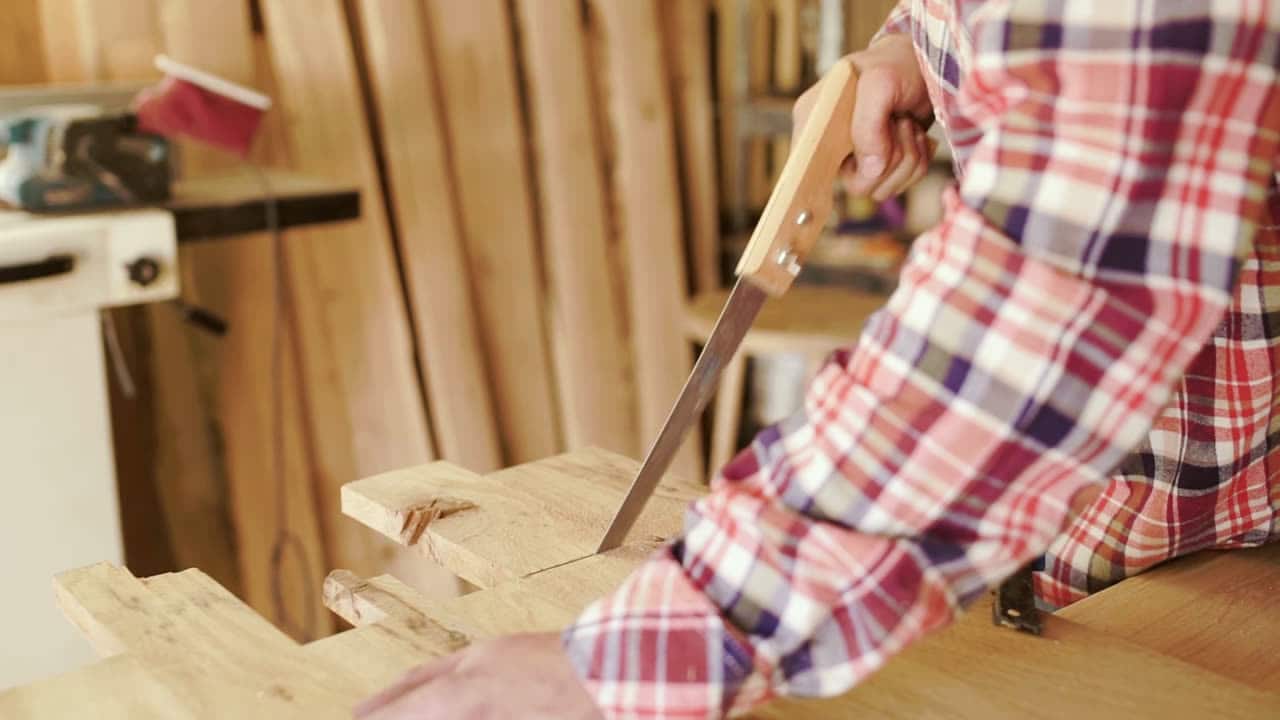
Finish Carpentry · From the field
Walk into two identical Frederick townhouses, one with builder-grade trim and one with real casing, a proper crown and a built-in flanking the fireplace — and one of them feels like twice the house. That difference is finish carpentry, and it is the most misunderstood trade we run.
Quick answer
Finish carpentry is everything wooden you can see and touch: baseboard, casing, crown molding, wainscoting, window sills, stair trim, interior doors, mantels and built-ins. It is the last trade through and the only one whose work is at eye level forever — which is why the skill gap between carpenters shows more than in any other trade.

Rough carpentry builds the parts of a house you never see again — studs, joists, headers, all of it buried by drywall within weeks. Finish carpentry is the opposite: it is exclusively the parts you see, at eye level, in raking light, every day for as long as you own the house. Baseboards, door and window casing, crown molding, sills and aprons, stair skirts and railings, closet systems, mantels, built-ins, the interior doors themselves and how they hang.
That visibility is why the skill gap between carpenters is more legible here than anywhere else in construction. A framing error gets corrected by the drywall; a tile error hides under a rug. A mitered corner that does not close, a reveal that wanders along a door casing, caulk doing a joint’s job — those sit in your sightline forever. The difference between a tight house and a sloppy one is measured in thirty-seconds of an inch, repeated a thousand times.
It is also the trade Frederick’s housing stock tests hardest. A carpenter can cut a perfect 45-degree miter all day; the problem is that in a 1955 rancher in Braddock Heights or a 1920s rowhouse near downtown Frederick, no corner is actually 90 degrees and no floor is actually level. Real finish carpentry is the craft of making straight material look right in a crooked house — scribing to walls that bow, cheating miters a degree at a time, splitting differences the eye will never find.
Most Frederick-area homes built since the 1980s came with the builder’s minimum: 2¼-inch “clamshell” or colonial casing and 3-inch base, in finger-jointed pine or MDF, installed at production speed. It reads as invisible — which is the problem. Upgrading to a taller baseboard and wider casing is the highest-impact, lowest-drama upgrade in interior work: no demolition, no permits, a room done in a day or two, and the room afterward looks renovated even though the only change is an inch and a half of profile.
Material choice is simpler than the lumberyard makes it look. For painted trim — which is most trim now — MDF and primed finger-jointed pine both take paint beautifully and stay straight; MDF’s one enemy is standing water, which parks it away from bathroom floors and basement slabs on grade. For stained trim, there is no shortcut: it must be solid wood, every cut shows, and filler can’t hide anything, which is why stain-grade work costs meaningfully more in both material and labor.
Where trim earns compound interest is consistency. One remodeled room with new base makes the hallway outside it look shabby; a whole-floor trim package, run in one mobilization, costs less per room than piecemeal upgrades and makes the house read as one deliberate decision. It is the project we most often see homeowners wish they had done all at once.
The feature-wall boom is really a finish carpentry boom. Board-and-batten in a mudroom or up a staircase, a picture-frame grid in a dining room, shiplap in a powder room, a full-height slat wall behind a bed — all of it is the same discipline: layout math first, so the panels land symmetric and the spacing never visibly drifts, then straight material, tight joints, and paint.
Layout is the part homeowners cannot see in the finished photos and the part that separates a custom job from a weekend video. A wall is never a convenient width; the battens have to divide it so the end bays match, outlets land inside panels rather than on their borders, and the chair rail height agrees with the stair pitch when the paneling turns and climbs. Ten minutes of arithmetic wrong at the start becomes a wall you can’t stop seeing.
These projects are also the natural moment to fix what the wall was hiding. Paneling wants a flat wall behind it; a wavy plaster wall in an older Frederick house gets skim-coated or furred first, and since our crew does drywall and paint as well as carpentry, the wall gets corrected, paneled and painted in one scope instead of three referrals.
A built-in is the finish carpentry project with the biggest before-and-after: bookcases flanking a fireplace, a window seat with storage under a bay, a mudroom drop zone with bench and cubbies, a home-office wall that swallows the clutter of two jobs. Unlike furniture, a built-in is scribed to the actual walls, runs to the ceiling, carries trim that ties into the room’s existing lines, and — done right — looks like the house was built around it.
The build quality lives in details you should ask about: plywood boxes rather than bare MDF for anything carrying weight over time; shelves thick enough, or short enough, not to sag under real books (a 36-inch span of ¾-inch material will bow — good builds keep spans down or beef the shelf); adjustable shelving where contents will change; face frames and doors aligned to a consistent reveal; and the unit anchored to studs, which stopped being optional the day furniture-tipping standards existed.
Value-wise, built-ins are among the few interior projects that read as architecture to an appraiser and to buyers — a family room with a fireplace wall of cabinetry photographs like a different house. But build them for how you live, not the listing: the window seat you read in every Sunday repays its cost in a currency the appraisal never captures.
A surprising amount of everyday home annoyance is finish carpentry wearing a disguise. Doors that stick every August and swing open on their own in January; latches that stopped catching; the gap over a door that widens toward one side — these are hinge, jamb and seasonal-movement problems, and a carpenter fixes in an hour what a homeowner fights for years. Interior door replacement is its own quiet upgrade: swapping hollow flat slabs for solid-core panel doors changes both how a house sounds and how it feels, one opening at a time.
Stairs are the highest-stakes finish carpentry in the house because they carry both code and craft: baluster spacing, handrail height and returns, tread nosing — all inspected items when work is permitted, all safety items regardless. A squeaky stair, a loose newel, a rail that flexes underhand are all fixable without rebuilding the staircase, and a carpenter who does stair work will tell you which ones are cosmetic and which one is the reason to call this month.
This is also the honest place to say what finish carpentry is not: it is not structural. Removing a wall, sistering a joist, framing a new opening — that is rough carpentry and engineering, a different conversation we also have, but a different conversation. If someone quotes you crown molding and load-bearing wall removal in the same casual breath, ask more questions.
If you only skim
The trade behind this post
Finish Carpentry & Trim
Reading because you have this exact problem? Call and describe it. You’ll get a straight answer on whether it’s something we do and roughly what it runs.
(301) 524-1729See how we do finish carpentryOn the job
Trade photography, stage by stage. Photos of our own recent jobs come out at the walkthrough, on the actual house.


Straight answers
Not covered here? Call and ask — you’ll get a real answer, not a “depends on the job”.
Trim is priced by the linear foot and the profile, which is why quotes need a walkthrough rather than a phone estimate — a whole-floor base-and-casing package and a single dining-room wainscot are different animals. The finish carpentry page on this site lists the ranges we actually price to. The useful rule: material is the small half; the labor to fit it to your specific crooked walls is the real product.
Usually, one of two ways. Many historic profiles from Frederick’s older neighborhoods are still milled or close enough to stock that a trained eye can’t catch the splice; where they aren’t, a millwork shop can knife-grind the profile from a sample section — costlier, and worth it in a room where old and new will sit side by side. Bring us a foot of the original and we’ll tell you which case you’re in.
We finish what we build — painting is one of our own trades, not a referral. That matters more for trim than anywhere else: filled nail holes, caulked top edges and a brushed enamel coat are half of what makes carpentry look seamless, and a crew that knows the painter is itself is a crew that leaves the woodwork ready to shine rather than “ready for others.”
Overlap in skills, difference in venue. A cabinetmaker builds furniture-grade boxes in a shop; a finish carpenter makes things fit and look right inside a real, imperfect house. Built-ins sit in the middle: we build and install them site-fitted, and for some projects — a paint-grade office wall, a window seat — that is exactly right, while a stained walnut library is a shop commission. We will tell you which side of the line your project sits on.
Most of what we are asked for is measured in days, not weeks: a room of base and casing in a day, a whole-floor trim package in two to four, a board-and-batten wall in one to two including paint, a built-in typically three to five between templating, building and finishing. The long pole is decision time — profile, paint color, layout — so decisions made before we arrive are days saved on the calendar.
Keep reading
Other write-ups on this trade and the ones that usually come with it.
While the crew is there

Talk to the people doing the work
Tell us what needs doing. We’ll walk it with you, sequence every trade it touches, put the price in writing, and leave you to decide.
Get a quote
Two short steps. No obligation, no pressure — just a clear number and a straight answer about what the job involves.


Tick as many as you like. Most jobs are two or three of them at once, and I sort out the detail when I come and look. Nobody gets turned away for choosing the wrong box.


