


Interior & Exterior Painting
Painting
Read more403 Navaho Dr, Frederick, MD 21701

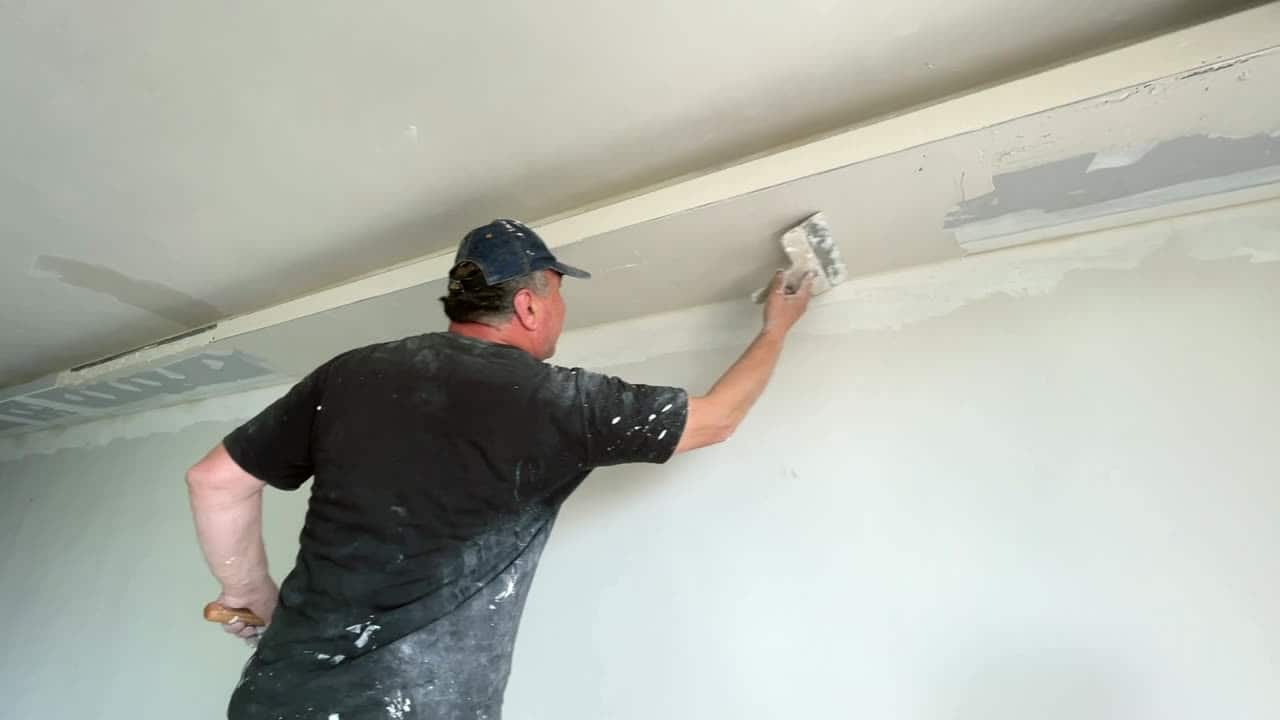
Finishing · From the field
A textured ceiling in a house built before the mid-1980s is a sampling question before it is a scraping question. Why that is, what the test involves, and what separates a ceiling that comes out genuinely flat from one that reads like a scraped ceiling forever.
Quick answer
If the house was built or last re-ceilinged before the mid-1980s, yes, test it before anything disturbs it. Asbestos was used in textured ceiling finishes into the 1980s, and the only way to know whether a particular ceiling contains it is a laboratory analysis of a sample. The test is inexpensive and quick. A negative result means an ordinary removal; a positive result means the work belongs to a licensed asbestos abatement contractor rather than to us, and we will tell you that plainly rather than scraping it anyway.

Textured ceiling finishes were extremely common in American housing from the 1950s through to the 1980s, and for much of that period asbestos was a normal ingredient in them. It was banned in that application in the late 1970s, but existing stock continued to be used for several years afterwards, which is why the practical cut-off most people work to is the mid-1980s rather than the ban date. A ceiling applied in 1983 can perfectly well contain it.
The reason this matters is specific to what removal involves. Asbestos in a ceiling that nobody touches is not doing anything; the hazard is in the fibres becoming airborne, and scraping a ceiling is close to a worst-case method of making that happen. This is the one home-improvement task where the preparation step is not about quality, it is about whether the job should be done by us at all.
The EPA publishes clear guidance on asbestos in homes and on when it should be left alone rather than disturbed, and it is worth ten minutes of reading if you are weighing this up. The short version that applies to ceilings: intact and undisturbed is low risk, and disturbing it without knowing is the thing to avoid.
A small sample — a thumbnail-sized piece of the texture, taken wetted down to limit dust, typically from an inconspicuous spot such as a closet ceiling or behind where a light fitting sits — goes to an accredited laboratory for polarised light microscopy. Results normally come back in a few days, and a standard sample costs tens of dollars rather than hundreds. Many people take the sample themselves following the lab’s instructions; many prefer to have it taken.
One sample is usually enough for a single ceiling applied at one time, but a house that was extended or re-ceilinged in phases can genuinely have different material in different rooms, and those get sampled separately. It is also worth remembering that a negative result on the texture does not say anything about other materials in an older house — joint compound, floor tile and pipe insulation all had their own asbestos eras.
What you get at the end is a document, which is the real value. It settles the question, it tells the contractor what they are working with, and in a sale years later it is evidence that the ceiling was handled properly. A removal done on an assumption leaves you with nothing to show anybody.
Then the work is asbestos abatement and it is not our trade. Maryland regulates this work and it is done by licensed abatement contractors under containment, with negative air pressure, specific disposal routes and clearance testing at the end. It is more expensive than a standard removal and it is not optional. Anybody offering to scrape a known-positive ceiling as ordinary work is offering to break the law and to contaminate your house, and the price being attractive does not change either of those.
There is also a perfectly respectable third option, which is to leave it. An intact textured ceiling that tests positive but is in good condition can be covered rather than removed — a new layer of drywall fixed through to the joists over the top of it, then taped and finished flat. That encapsulates the material instead of disturbing it, it ends up looking identical to a removal, and it is often cheaper than abatement. It costs you half an inch of ceiling height and it means the material is still up there, which some people are comfortable with and some are not.
We do that overlay work. What we do not do is pretend the choice does not exist. Given a positive result, the three honest routes are abatement, encapsulation by overlay, or leaving it alone, and the right one depends on your tolerance, your ceiling height and your budget rather than on what is most convenient for a contractor.
A clean result means the removal is ordinary work, and the ordinary work is messier than people expect and more skilled than people expect. The scraping itself is the easy half: mask and seal the room properly, mist the texture with water so it releases rather than dusting, scrape with a wide blade, and keep the blade shallow enough not to gouge the paper face of the drywall underneath. A ceiling scraped dry makes an enormous mess and a ceiling scraped hard needs more repair than it saved.
Then comes the half that decides how the room looks. Under that texture is a ceiling that was never finished to be seen — the taping underneath was done knowing it would be hidden, so joints are often rough, screw heads show, and there will be patches where the scraping lifted paper. Getting from there to a flat ceiling is a skim coat, usually two passes, sanded, over the whole surface. That is the actual job. The texture removal is the prelude.
This is where cheap quotes come from and where disappointment comes from. A quote that covers scraping and spot-filling will produce a ceiling that is no longer textured and is visibly not flat — and a ceiling is the one surface in a house that gets raking light across it all day, so every imperfection reads. A quote that includes a full skim coat costs more and produces the thing people actually wanted when they asked for the popcorn to go.
Finally, plan the room properly. Light fittings come down, the floor gets fully protected, and the room is sealed from the rest of the house, because skim-coat sanding dust travels and it is fine enough to get everywhere. Most single rooms are a two to three day job start to finish, with the drying time between coats being the thing that sets the pace rather than the labour.
For most people, yes, and more than they expect. A flat ceiling makes a room read taller and brighter, it stops collecting dust and cobwebs in a texture that cannot be cleaned, and it removes the single clearest visual signal that a house has not been updated in forty years. Of all the things that make an older Maryland house feel dated, textured ceilings are near the top and they are among the cheapest to fix.
The case against is dust, disruption and the fact that it is a few days of your house being unusable in that room. There is no way to make removal tidy; it can be contained and it can be cleaned up properly, but it is inherently a messy process. People who are sensitive to that often do it room by room rather than all at once, and that works fine.
The one thing not to do is scrape it yourself on the assumption that a 1970s ceiling is probably fine. The test is the cheapest line item in the entire project and it is the only one that is about your health rather than your decor.
If you only skim
The trade behind this post
Drywall Finishing & Repair
Reading because you have this exact problem? Call and describe it. You’ll get a straight answer on whether it’s something we do and roughly what it runs.
(301) 524-1729See how we do finishingWhat finishing costs in MarylandOn the job
Trade photography, stage by stage. Photos of our own recent jobs come out at the walkthrough, on the actual house.


Straight answers
Not covered here? Call and ask — you’ll get a real answer, not a “depends on the job”.
For a tested-clean ceiling, removal plus a proper two-pass skim coat generally lands in the low single digits per square foot, with the spread driven by ceiling height, how much repair the surface needs after scraping, and access. A room with a vaulted ceiling or a stairwell costs more because of staging. Our drywall repair and finishing cost guide breaks the figures down, and the number worth comparing between quotes is whether a full skim is included or only spot-filling.
You can, and people do, but it rarely goes well. The texture is porous and absorbent, so it drinks paint, and rolling it wet tends to soften the texture and pull pieces off onto the roller. If the ceiling has never been painted this is especially likely. Spraying is kinder to it than rolling. But painting does not change the texture or the dated look, so it is a maintenance decision rather than an improvement one — and if the ceiling is untested and pre-1985, rolling it is still disturbing it.
On a tested-clean ceiling, removal and skim is usually the cheaper of the two and gives you the full ceiling height. On a ceiling that tests positive for asbestos, covering is frequently cheaper than abatement by a wide margin and avoids disturbing the material at all. The trade-off with covering is about half an inch of height and the fact that the original material stays in place above the new layer.
Typically two to three days for a standard room — masking and scraping on day one, first skim coat, then a second coat and sanding once the first has dried, then cleanup. The drying time between coats sets the schedule more than the labour does, and we do not rush it, because skimming over a coat that has not fully dried is how a ceiling cracks later. Larger or vaulted ceilings run longer.
Across Frederick County and Maryland within about 90 minutes of Frederick — eight counties from Hagerstown across to Annapolis. Maryland only; we do not work in Washington, DC. Call (301) 524-1729, or send photos of the ceiling and tell us roughly when the house was built through the quote form, and we will tell you whether testing comes first.
Keep reading
Other write-ups on this trade and the ones that usually come with it.
While the crew is there

Talk to the people doing the work
Tell us what needs doing. We’ll walk it with you, sequence every trade it touches, put the price in writing, and leave you to decide.
Get a quote
Two short steps. No obligation, no pressure — just a clear number and a straight answer about what the job involves.


Tick as many as you like. Most jobs are two or three of them at once, and I sort out the detail when I come and look. Nobody gets turned away for choosing the wrong box.


