Paver walkways and paths
Paver walkway
Read more403 Navaho Dr, Frederick, MD 21701

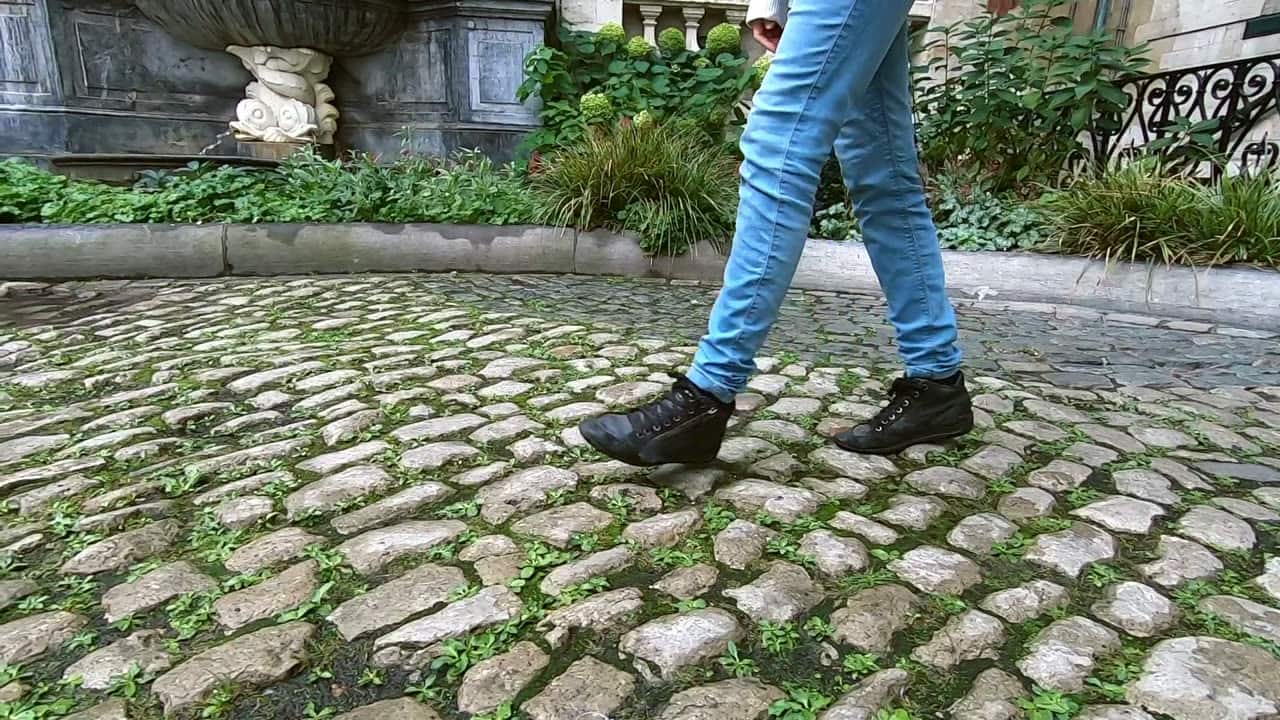
Pavers in Frederick & Central MD
A patio is a compacted stone base with a decorative surface on top. We quote the part you cannot see, because that is the part that decides whether it is still flat in ten years.
Quick answer
Concrete or brick pavers run $18 – $40 per square foot installed, natural stone $35 – $60, and a typical 300 square foot patio lands between $6,000 and $13,000. Those bands are wide on purpose. Paver selection moves them, cut-heavy shapes and curves move them, and so does access — a back garden reached through a side gate with a wheelbarrow costs more to build than one a machine can drive to. We would rather show the honest range than a tidy figure we then revise.
The work
Most people choosing a patio spend their time on the paver — the colour, the texture, the pattern — and almost none on the eight inches of crushed stone that will carry it. That is understandable, because the paver is the part you see in the showroom and the base is the part that is buried before anyone takes a photograph. It is also backwards. Pavers in Maryland rarely fail; bases fail constantly, and the surface simply reports the news.
So the way we quote a patio is to be explicit about the invisible half. How deep the excavation goes, what fills it, how many passes the compactor makes and in how many lifts, whether there is separation between stone and subsoil, and what stops the field spreading at the perimeter. Those five decisions are made in the first day of the job and they are the whole difference between two quotes that look identical on paper.
The visible half still matters and we are not pretending otherwise. Pattern, border, the soldier course that frames a field, where a curve goes, how a patio meets a step or a door threshold, whether the sitting area is actually big enough for the furniture you own — all of that is worth getting right, and it is the part of the conversation homeowners enjoy. We just do it after the base is settled rather than instead of it.
Maryland paver patio installation, materials and labour, 2026. These are the bands from our pavers page carried straight down — published sources for this trade disagree widely, and paver selection, cut-heavy shapes, access and grading all move them. A site visit replaces them with a number.
Ranges, not quotes. Real numbers come from a walkthrough — access, condition, height and finish level move a price more than square footage does. Estimates are free and in writing.
Get your numberFull paver patio cost guide for MarylandPrefer to just talk?
Call and describe the job. You’ll get a straight answer on whether it’s something we do and roughly what it runs.
(301) 524-1729
Self-performed
Paver patios
What’s included
Written into the estimate, not assumed. If something on your job is not on this list, it gets priced and named before anyone starts.
We dig to the depth the surface needs rather than stopping when the shovel hits something firm. Hitting firm material four inches down is not a base, it is a shelf, and the soft ground around it is where the settlement comes from. Topsoil and anything organic comes out, because it loses volume as it breaks down and takes the patio with it.
A plate compactor only transmits energy a limited distance into loose stone. Eight inches placed at once gives a firm crust over four inches of loose material that consolidates later under your furniture. We place it in lifts and compact each one before the next goes down, so the finished base behaves as a single mass. This is the most commonly skipped step in the trade and the most expensive one to skip.
Much of this county is clay or clay loam. Put stone straight onto it and over a few wet seasons the clay works up into the voids and the stone works down into the clay, and the base loses the interlock that made it a base. A separation layer between the two keeps each where it belongs.
A thin, consistent bedding course screeded to grade is what lets each unit sit at the right height without being tapped into place individually. Layout starts from the line that matters most — usually the house, sometimes a sightline — so cuts land where they are least visible rather than along the front edge.
A paver field has no tensile strength; it holds its pattern because every unit is wedged against its neighbours. Restraint at the perimeter stops the outside row creeping outward, which is what opens joints and lets jointing sand wash out. Polymeric sand in the joints then locks the field, sheds water and keeps weed seed from germinating in the gaps.
The field falls away from the house at roughly an eighth of an inch per foot, which is enough to shed water and little enough that nobody notices. Where a downspout discharges near the patio we extend it past the hardscape, because roof water delivered at the edge of a base washes the fines out of it.
On the job
What the trade looks like at each stage. Photos of our own recent jobs come out at the walkthrough, on the actual house.


Straight answers
Not covered here? Call and ask — you’ll get a real answer, not a “depends on the job”.
A straightforward patio of a few hundred square feet is usually three to five working days: a day of excavation and spoil removal, a day or more building and compacting base, a day setting the field and cutting, then edge restraint, jointing and clean-up. Rain stops base work rather than slowing it, because compacting saturated material achieves nothing, so a wet week extends the schedule. Walls, steps and heavy grading add time and we say how much before starting.
Sometimes, and it depends on the slab. A sound, well-drained slab at a workable height can take a bedding course and pavers, which saves demolition and spoil removal. A cracked or settled slab cannot, because every movement in it telegraphs up through the pavers within a season or two, and a slab that holds water will trap it under the new surface. We look at it before saying yes, and where the answer is no, removal is $4 – $9 per square foot.
Far less than people expect, and what does grow is usually seed landing from above rather than coming up from below. Polymeric sand sets firm in the joints and leaves very little for a seed to germinate in. What makes weeds a real problem is sand that has washed out, which happens where there is no edge restraint or where water is being delivered across the surface in volume. Keeping the joints full is the maintenance, and it is occasional rather than constant.
Same crew, same visit
Most pavers jobs are two or three of these at once, which is why they are priced and scheduled together rather than as separate call-outs.
From the field
Longer answers than a quote page has room for — how the work fails, what putting it right actually involves, and when waiting is the honest call.
Sources worth your time
None of these are ours. They are the offices and standards bodies that set the rules we work to, so you can verify what we say rather than take it.
The body that sets installation guidance for interlocking concrete pavement and segmental retaining walls, formed when ICPI and NCMA merged. Base depth, compaction, edge restraint and the height at which a wall needs engineering all come from here rather than from us.
OpenThe county office that decides whether your job needs a permit. Routine gutter work does not; structural and roof work usually does.
OpenWhere the residential-construction standards and material research behind these decisions are published.
Open
Talk to the people doing the work
Tell us what needs doing. We’ll walk it with you, sequence every trade it touches, put the price in writing, and leave you to decide.
Get a quote
Two short steps. No obligation, no pressure — just a clear number and a straight answer about what the job involves.


Tick as many as you like. Most jobs are two or three of them at once, and I sort out the detail when I come and look. Nobody gets turned away for choosing the wrong box.


