Level 5 skim coat
Level 5 skim
Read more403 Navaho Dr, Frederick, MD 21701

Finishing in Frederick & Central MD
A repair that is flat, strong and the wrong texture is still a repair you can see. Matching the surface around it is the difference between a patch and no patch.
Quick answer
On a repair it is $45 to $160 per area and the sample board is included, because matching is part of doing the repair properly rather than an extra. Re-texturing a whole wall is $1.10 to $2.40 per square foot and a ceiling is $1.60 to $3.20, since overhead work is slower. A hand-applied pattern over a small area runs $120 to $380 because it is slow, skilled work with no shortcut.
The work
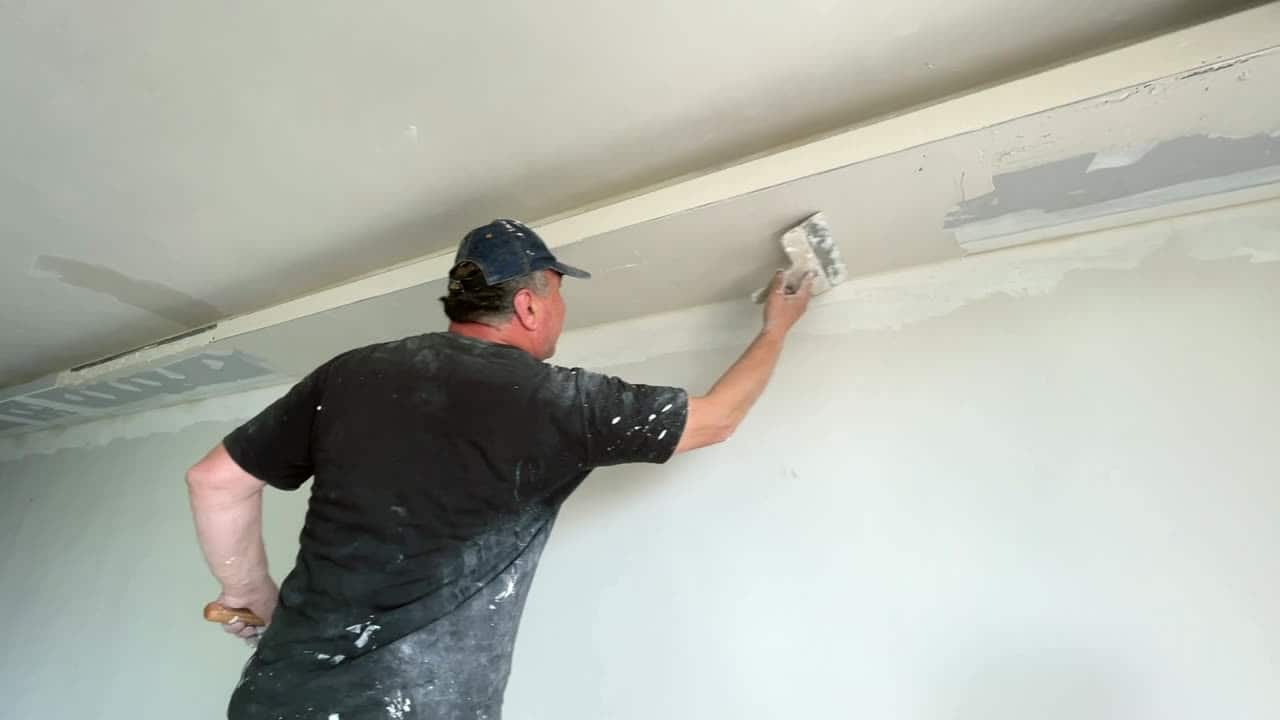
Texture is the part of a drywall repair that gets rushed, and it is the part people actually notice. The structural work and the three coats of compound decide whether a repair lasts; the texture decides whether anyone knows it happened. Knockdown, orange peel, skip trowel, sand swirl, stomp and the various hand-applied patterns of the sixties and seventies all behave differently under a spray gun or a trowel, and each one has a right consistency, a right pressure and a right moment to knock it down.
Our method is to match on a sample board rather than on your wall. A piece of scrap gets the texture applied, held up against the existing surface in the room's own light, adjusted and repeated until it reads the same. That takes twenty minutes and it is twenty minutes that cannot be recovered afterwards, because the alternative is discovering the mismatch when the primer goes on and then sanding a wall back to start again.
Sometimes the honest answer is that a patch will not match. Heavy hand-applied patterns are a record of one particular person's trowel on one particular afternoon, and nobody reproduces that exactly. In those cases we price two options side by side — the patch, and re-texturing the whole wall or ceiling — and let you choose with the numbers in front of you rather than selling you the cheaper one and hoping you do not notice.
Texture matching is normally a line inside a repair rather than a job on its own. Whole-surface re-texturing is priced by area.
Ranges, not quotes. Real numbers come from a walkthrough — access, condition, height and finish level move a price more than square footage does. Estimates are free and in writing.
Get your numberFull texture matching cost guide for MarylandPrefer to just talk?
Call and describe the job. You’ll get a straight answer on whether it’s something we do and roughly what it runs.
(301) 524-1729
Self-performed
Texture matching
What’s included
Written into the estimate, not assumed. If something on your job is not on this list, it gets priced and named before anyone starts.
Knockdown, orange peel, skip trowel, stomp or hand pattern, and the grade of it. Naming the texture correctly is most of matching it, and "bumpy" is not a specification.
Texture applied to scrap, held against the wall in the room's own light, adjusted and repeated until it reads the same. Twenty minutes here saves sanding a wall back later.
Spray textures sprayed with the right tip and pressure, hand patterns worked with the same tool family that made the original. The two are not interchangeable and a sprayed imitation of a trowel pattern shows.
Texture carried past the repair and faded into the existing surface, so there is no hard line where new meets old. A visible texture boundary is as obvious as a visible patch.
A primer coat over the matched area before you look at it, because bare compound and painted wall reflect light completely differently and a match that looks wrong unprimed is usually right.
Where a hand pattern or heavy stipple will not match invisibly, we quote the patch and the whole-surface re-texture together and let you decide, rather than taking the cheaper job and hoping.
On the job
What the trade looks like at each stage. Photos of our own recent jobs come out at the walkthrough, on the actual house.


Straight answers
Not covered here? Call and ask — you’ll get a real answer, not a “depends on the job”.
Knockdown, orange peel and skip trowel match well enough to be invisible in almost every case. Sand swirl and stomp patterns are harder but usually achievable. The genuinely difficult ones are heavy hand-applied patterns from the sixties and seventies, which record one person's trowel on one afternoon. There we price the patch and the whole-surface re-texture side by side and tell you honestly which we would choose in your room.
Almost always light, not texture. Fresh compound is more porous than the painted wall around it, so it absorbs light and paint differently and reads as a slightly different shade even when the surface is perfectly flat. A primer coat over the repair fixes it in most cases. Where it does not, the sheen of the existing paint is the culprit, and the answer is to cut the paint in to the nearest corner rather than spot-paint.
Not usually. We carry the new texture past the repair and fade it into the existing surface, which avoids any hard boundary, and on a spray texture that is genuinely invisible. Whole-wall or whole-ceiling re-texturing is for two cases: a pattern that will not match, and a surface with so many repairs across it that patching each one costs more than doing the lot. We will tell you which you are in.
Same crew, same visit
Most finishing jobs are two or three of these at once, which is why they are priced and scheduled together rather than as separate call-outs.
From the field
Longer answers than a quote page has room for — how the work fails, what putting it right actually involves, and when waiting is the honest call.
Sources worth your time
None of these are ours. They are the offices and standards bodies that set the rules we work to, so you can verify what we say rather than take it.
Check any Maryland contractor's licence before you sign. Ours is on file with the Commission.
OpenWhere the residential-construction standards and material research behind these decisions are published.
OpenThe county office that decides whether your job needs a permit. Routine gutter work does not; structural and roof work usually does.
Open
Talk to the people doing the work
Tell us what needs doing. We’ll walk it with you, sequence every trade it touches, put the price in writing, and leave you to decide.
Get a quote
Two short steps. No obligation, no pressure — just a clear number and a straight answer about what the job involves.


Tick as many as you like. Most jobs are two or three of them at once, and I sort out the detail when I come and look. Nobody gets turned away for choosing the wrong box.


