Door casing and window trim
Casing and trim
Read more403 Navaho Dr, Frederick, MD 21701

Finish Carpentry in Frederick & Central MD
Baseboard is where a room meets the floor, and it is the trim people stare at from a sofa for twenty years.
Quick answer
Baseboard runs $4 to $12 per linear foot installed, with material grade and profile height driving most of the difference — painted MDF at the bottom, stain-grade hardwood and tall profiles at the top. Removing the existing baseboard adds $1 to $3 and shoe moulding $2 to $5. A typical 12 by 14 foot room is roughly $280 to $700 depending on the material.
The work
Baseboard looks like the easiest trim in the house and it is the one that most often gives a room away. The reason is that it has to follow two surfaces at once — a wall that is not flat and a floor that is not level — along a run that may be twenty feet with nothing to hide behind. Every gap along the bottom edge and every joint that has opened at a corner is at the eye level of somebody sitting down.
Most of the work is in the joints. Inside corners get coped, which means one piece is cut to the profile of the other so the joint slides rather than opens when the house moves with the seasons; a mitred inside corner shows a V by the first winter. Long runs get a scarf joint on a stud — two pieces cut at matching angles so the overlap stays tight rather than butting square and pulling apart. Outside corners get mitred, glued and pinned, because the glue is what stops a mitre opening, not the nails.
Then there is the floor. In older Frederick County houses the floor is not level and the baseboard cannot be either — it has to be scribed, which means cut along its bottom edge to follow the floor so the top line stays straight. The cheap alternative is to leave the gap and caulk it, which looks acceptable for a year and then cracks. Where the floor movement is too great to scribe out, a shoe moulding is the honest answer and we will tell you which we recommend before we start.
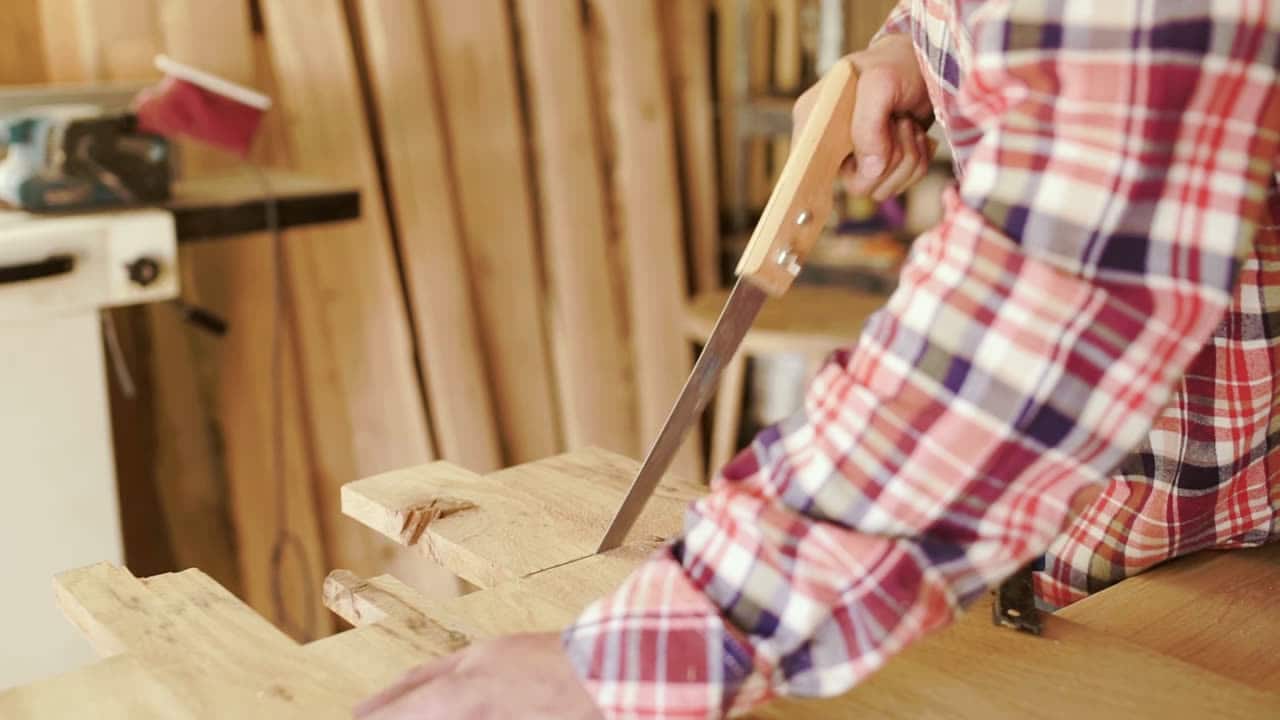
Maryland trim work, installed. Material grade moves these ranges more than anything else — MDF at the low end, hardwood and tall profiles at the top.
Ranges, not quotes. Real numbers come from a walkthrough — access, condition, height and finish level move a price more than square footage does. Estimates are free and in writing.
Get your numberFull baseboard cost guide for MarylandPrefer to just talk?
Call and describe the job. You’ll get a straight answer on whether it’s something we do and roughly what it runs.
(301) 524-1729
Self-performed
Baseboard installation
What’s included
Written into the estimate, not assumed. If something on your job is not on this list, it gets priced and named before anyone starts.
Each inside corner cut to the profile of the piece it meets, so seasonal movement closes the joint instead of opening it. It takes several times as long as a mitre and it is the reason trim still looks right after five winters. The parent page explains the geometry properly.
Where a run is longer than the stock, the pieces join on a stud with matching bevels glued together rather than butted square. A butt joint in baseboard opens as the material moves and leaves a dark line that filler never quite hides.
The bottom edge cut to follow an out-of-level floor so the top line of the baseboard stays straight across the room. Where the variation is too great for scribing we recommend shoe moulding and say so before starting rather than caulking a half-inch gap and hoping.
Existing trim taken off without wrecking the drywall behind it, the wall made good, and the nails pulled rather than hammered over. In a house built before 1978 we treat painted trim as lead-bearing and work accordingly — the EPA page below is the plain-English version of what that means.
Profile and height chosen against what is already there and against the ceiling height, not defaulted to whatever the merchant stocks. A three-inch baseboard in a room with nine-foot ceilings looks mean, and a seven-inch one in a 1960s rancher looks borrowed.
Nail holes filled and sanded, the top edge caulked to the wall, joints dressed, and the room cleaned down — handed over ready for paint, or painted by us in the same visit, which is cheaper than bringing a painter back separately.
On the job
What the trade looks like at each stage. Photos of our own recent jobs come out at the walkthrough, on the actual house.


Straight answers
Not covered here? Call and ask — you’ll get a real answer, not a “depends on the job”.
If it is being painted, MDF is genuinely the better choice in most rooms — it is dimensionally stable, has no grain to telegraph through paint, takes a crisp profile and costs less. Use timber where it will be stained, where the run may get wet, or in a basement or garage where MDF swelling is a real risk. We will recommend by room rather than by habit.
Only if the floor is too far out of level to scribe the baseboard to, or if the flooring was installed with an expansion gap that needs covering. On a reasonably flat floor, scribed baseboard without shoe looks cleaner and is what we would fit in our own house. Where the floor dips badly, shoe is the honest fix rather than a half-inch of caulk.
Usually yes — baseboard is fitted to sit just above the carpet with the pile tucked underneath, so the carpet stays down. If the carpet is being replaced, fitting trim first and carpet after is the better order. Where the existing baseboard is being swapped, we work in sections and keep the carpet protected rather than lifting it.
Same crew, same visit
Most finish carpentry jobs are two or three of these at once, which is why they are priced and scheduled together rather than as separate call-outs.
From the field
Longer answers than a quote page has room for — how the work fails, what putting it right actually involves, and when waiting is the honest call.
Sources worth your time
None of these are ours. They are the offices and standards bodies that set the rules we work to, so you can verify what we say rather than take it.
Where the residential-construction standards and material research behind these decisions are published.
OpenAny house built before 1978 has lead rules attached to disturbing paint. This is the rule itself.
OpenCheck any Maryland contractor's licence before you sign. Ours is on file with the Commission.
Open
Talk to the people doing the work
Tell us what needs doing. We’ll walk it with you, sequence every trade it touches, put the price in writing, and leave you to decide.
Get a quote
Two short steps. No obligation, no pressure — just a clear number and a straight answer about what the job involves.


Tick as many as you like. Most jobs are two or three of them at once, and I sort out the detail when I come and look. Nobody gets turned away for choosing the wrong box.


