Substrate prep and floor levelling
Substrate prep
Read more403 Navaho Dr, Frederick, MD 21701

Tile Flooring in Frederick & Central MD
A tile floor is decided before the first tile goes down. Where the layout starts and how flat the substrate is matter more than how neatly anything is cut.
Quick answer
Floor tile installation labour typically runs $8 to $18 per square foot, with the tile itself a separate line that ranges enormously — from a few dollars a foot to well over twenty. Self-levelling substrate prep is $2 to $6 per square foot where the floor needs it, and removing the existing flooring is $1.50 to $4.00. So a 200 square foot floor is roughly $1,600 to $3,600 in labour before tile and before prep. A walkthrough replaces that with a real number.
The work
The craft in a tile floor is almost entirely in the first hour and the last. The first hour is layout — working out where the field starts so the cuts land somewhere sensible, because a floor set out from the wrong wall ends with a two-inch sliver along the most visible edge and a full tile hidden under the fridge. We set the whole field out dry and walk it with you before anything is bonded down, which is the one point at which a layout decision is still free.
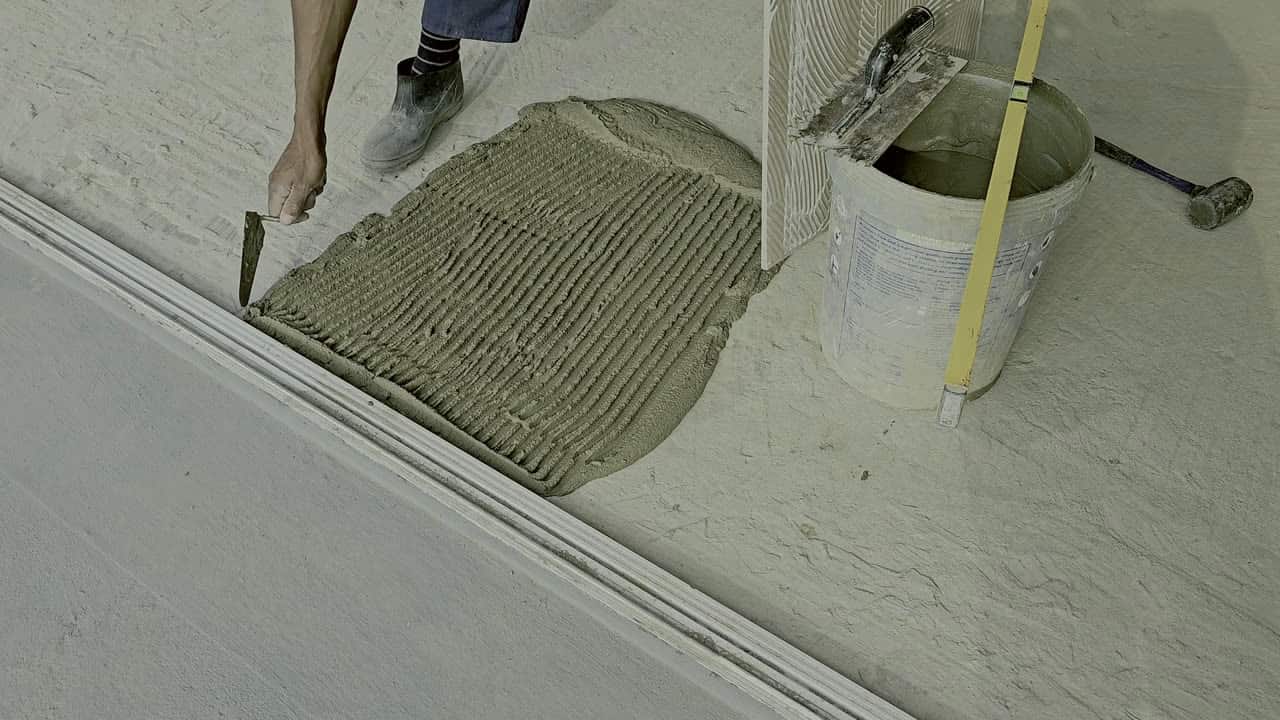
The last part is the bit nobody sees: how much mortar is actually under each tile. A tile bonded on five dabs sounds hollow, cracks when something heavy lands on it, and lifts at a corner within a few years. Proper coverage means notched trowel work in one direction, back-buttering where the tile or the format needs it, and lifting tiles during the job to confirm the back is wetted out rather than assuming it. It takes longer and it is the difference between a floor that lasts thirty years and one that starts failing in three.
Between those two things sits the substrate, which is where most tile failures originate. Tile is rigid and unforgiving; it follows whatever is under it and it will not bridge a dip or absorb movement. A floor that felt fine under carpet can be visibly lipped under tile, and a floor that flexes under foot will crack grout joints no matter how good the tiling is. We check flatness and deflection at the estimate and tell you what the floor genuinely needs, which is sometimes more than anybody wants to hear.
Maryland tile, installed labour plus setting materials. Tile itself is a separate line and ranges enormously. Substrate repair is quoted after we see it.
Ranges, not quotes. Real numbers come from a walkthrough — access, condition, height and finish level move a price more than square footage does. Estimates are free and in writing.
Get your numberFull tile floor cost guide for MarylandPrefer to just talk?
Call and describe the job. You’ll get a straight answer on whether it’s something we do and roughly what it runs.
(301) 524-1729
Self-performed
Tile floor installation
What’s included
Written into the estimate, not assumed. If something on your job is not on this list, it gets priced and named before anyone starts.
The field laid out loose, starting lines established from the room rather than from a convenient wall, and cut positions checked at doorways, hearths and cabinet runs before anything is bonded. You see where the small cuts will land while it is still free to change them.
Flatness checked with a straightedge, deflection assessed, and the floor brought to what the tile needs — self-levelling compound, grinding down a high spot, cement board or an uncoupling membrane depending on what is there. The substrate page covers this properly, and it is priced after we see the floor rather than guessed.
Mortar combed in one direction, back-buttering where the format calls for it, and tiles lifted during the pour to confirm the backs are wetted out. Hollow-sounding tile is the commonest defect in domestic tiling and it is entirely a question of whether somebody checked.
A soft joint at the perimeter, at changes of plane and across large runs, rather than grout hard into every wall. Tile and the structure under it move at different rates with temperature and humidity, and a floor grouted rigidly into its boundaries relieves that stress by cracking somewhere you did not choose.
Where the tile meets carpet, timber, vinyl or a door threshold, the junction is detailed with a proper profile rather than a bead of filler. Height differences get thought about before the build-up is decided, because a door that no longer clears the floor is a problem discovered far too late.
Joint width chosen for the tile rather than defaulted, grout colour confirmed against a sample with you, silicone rather than grout at every change of plane, and the floor cleaned down properly. We leave the offcuts and the spare full tiles labelled in the garage, because in ten years an attic-stock tile is worth more than the whole box cost.
On the job
What the trade looks like at each stage. Photos of our own recent jobs come out at the walkthrough, on the actual house.


Straight answers
Not covered here? Call and ask — you’ll get a real answer, not a “depends on the job”.
Tap across it with a knuckle or a coin. A properly bonded floor sounds solid and consistent; hollow spots mean the mortar coverage under those tiles is poor, which is the commonest defect in domestic tiling and the usual reason a tile cracks or lifts years later. Then look at where the cuts landed — a floor set out properly has its small cuts in the least visible places. Those two checks tell you more than the grout lines do.
Usually at least partly, yes. Tile follows whatever is under it and cannot bridge a dip, and modern large-format tile is especially unforgiving — a hollow that was invisible under carpet shows as a lipped edge under a 24-inch tile. We check flatness with a straightedge at the estimate and tell you what the floor actually needs. Self-levelling compound runs $2 to $6 per square foot and it is the least glamorous money you will spend on the job.
Light foot traffic after about 24 hours, normal use after the grout has cured, which is usually another day or two depending on the product and the conditions. Furniture and appliances back last. The temptation to walk on a floor the same evening is understandable and it is how tiles get nudged out of plane before the mortar has set, so we leave it protected and tell you the dates.
Same crew, same visit
Most tile flooring jobs are two or three of these at once, which is why they are priced and scheduled together rather than as separate call-outs.
From the field
Longer answers than a quote page has room for — how the work fails, what putting it right actually involves, and when waiting is the honest call.
Sources worth your time
None of these are ours. They are the offices and standards bodies that set the rules we work to, so you can verify what we say rather than take it.
Publishes the TCNA Handbook, the installation-method standard that tells a tiler which membrane, backer and mortar a wet area actually calls for.
OpenWhere the residential-construction standards and material research behind these decisions are published.
OpenCheck any Maryland contractor's licence before you sign. Ours is on file with the Commission.
Open
Talk to the people doing the work
Tell us what needs doing. We’ll walk it with you, sequence every trade it touches, put the price in writing, and leave you to decide.
Get a quote
Two short steps. No obligation, no pressure — just a clear number and a straight answer about what the job involves.


Tick as many as you like. Most jobs are two or three of them at once, and I sort out the detail when I come and look. Nobody gets turned away for choosing the wrong box.


