Tile floor installation
Tile floor
Read more403 Navaho Dr, Frederick, MD 21701

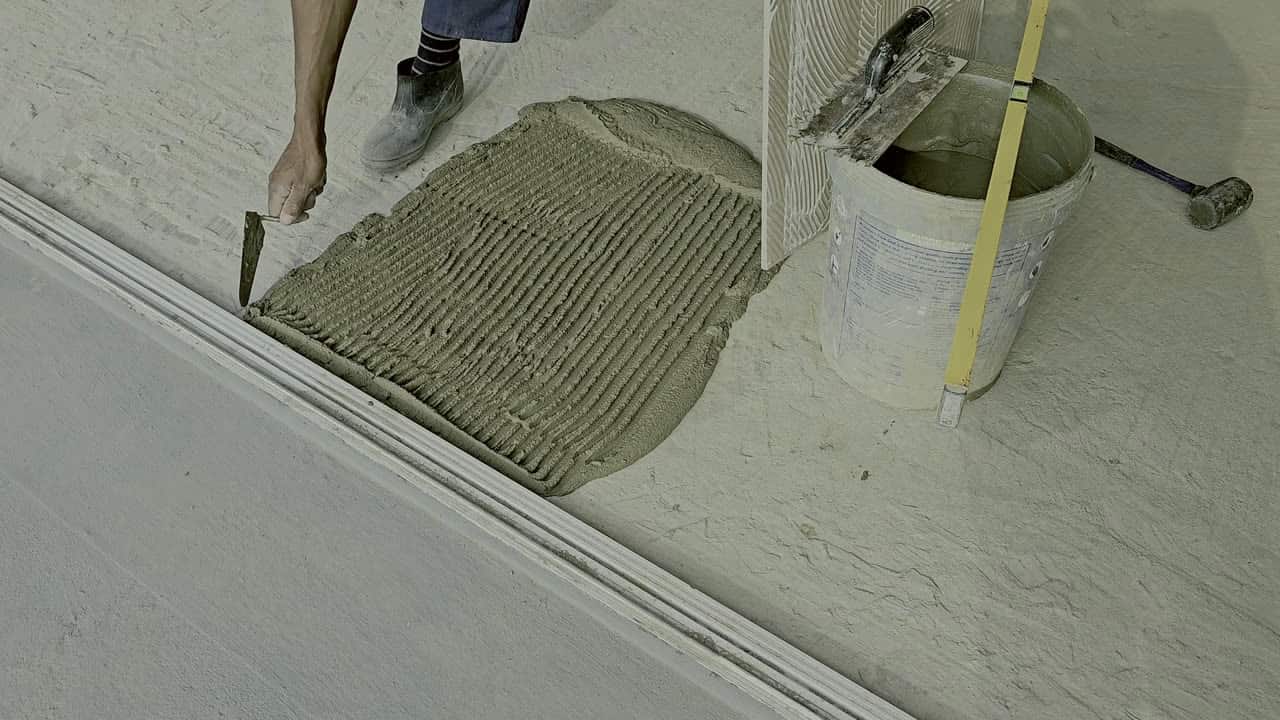
Tile Flooring in Frederick & Central MD
Nobody has ever admired a substrate. It is also the reason most tile floors fail, and the line on the quote people most want to delete.
Quick answer
Self-levelling compound runs $2 to $6 per square foot and grinding down high spots $2 to $5, with removing the existing flooring a further $1.50 to $4.00. Cement backer board is $3 to $6 and an uncoupling membrane $2 to $4 where either is needed. These are planning numbers — the parent page is right that substrate work is quoted after we see the floor, because what is under it is the whole question.
The work
Tile is a rigid finish on a building that moves. Everything that goes wrong with a tile floor — cracked tiles, failed grout lines, hollow spots, lipped edges — traces back to what was under it, and almost none of it is visible on handover. That is an uncomfortable combination, because it means the part of the job that determines whether the floor lasts is also the part a client cannot see and is most tempted to economise on.
There are two separate questions and they get confused with each other constantly. Flatness is whether the floor is level across its surface, and it is fixed with self-levelling compound or by grinding down the high spots. Deflection is whether the floor bounces under load, and no amount of levelling compound fixes that — it needs sheeting, blocking or sistering from below, because a floor that flexes will crack grout and eventually tile no matter how flat the surface is. We measure both and tell you which one you have.
Then there is what is already down. Removing old flooring is straightforward with vinyl plank or carpet and genuinely serious with old sheet vinyl or nine-by-nine tiles in a house of a certain age, because those and their black mastic can contain asbestos. We do not guess at that and we do not grind it to find out. If the age and the look of it raise the question, the right order is testing first, and abatement by a licensed contractor if the test comes back positive — not a cheerful afternoon with a scraper.
Maryland floor preparation ahead of tiling. The parent page says substrate repair is quoted after we see it, and that is the honest position — these are planning figures, not a quote.
Ranges, not quotes. Real numbers come from a walkthrough — access, condition, height and finish level move a price more than square footage does. Estimates are free and in writing.
Get your numberFull substrate prep cost guide for MarylandPrefer to just talk?
Call and describe the job. You’ll get a straight answer on whether it’s something we do and roughly what it runs.
(301) 524-1729
Self-performed
Substrate prep and floor levelling
What’s included
Written into the estimate, not assumed. If something on your job is not on this list, it gets priced and named before anyone starts.
A long straightedge across the floor in both directions to establish flatness, and a loaded walk plus a look at the framing to assess deflection. They are different faults with different fixes and conflating them is how a floor gets expensively levelled and then cracks anyway.
Dips filled with a cement-based self-levelling compound primed and poured to the depth the tile format needs, or high spots ground down where that is the cheaper route. Priced at $2 to $6 per square foot and itemised rather than buried in the tiling rate.
Carpet, vinyl plank, laminate and sound tile taken up and disposed of. Where old sheet vinyl, nine-by-nine tiles or black mastic suggest the house is of an age where asbestos is plausible, we stop and recommend testing rather than removal — and abatement is specialist licensed work we refer rather than attempt.
The right underlayment for the situation: cement backer board where the substrate needs rebuilding, an uncoupling membrane where movement between substrate and tile is the risk, or neither where the slab is sound and flat. We say which and why rather than adding a membrane to every quote as insurance.
Additional sheeting, blocking between joists or screwing down a loose subfloor where the deflection measurement calls for it. Where the fix needs to come from below and that is not accessible, you get told that the floor is not suitable for tile rather than sold a floor that will crack.
The total build-up calculated — levelling compound plus underlayment plus tile plus mortar — and checked against door clearances, appliance heights and the floor levels in adjoining rooms. A door that no longer swings is a problem found far too late, and it is entirely avoidable with five minutes of arithmetic.
On the job
What the trade looks like at each stage. Photos of our own recent jobs come out at the walkthrough, on the actual house.


Straight answers
Not covered here? Call and ask — you’ll get a real answer, not a “depends on the job”.
Level means horizontal relative to the world; flat means consistent relative to itself. Tile needs flat far more than it needs level — a floor with a gentle overall slope but no local dips will tile beautifully, while a dead-level floor with a hollow in the middle will give you lippage and cracked tiles. We measure flatness with a straightedge for exactly that reason, and most of what levelling compound buys you is flatness.
Not safely, and levelling compound will not fix it. Deflection is a framing problem — the floor flexes under load and tile, being rigid, cracks or opens its grout joints in response. The fix is stiffening from below or more sheeting on top, and where neither is possible the honest answer is that the floor is not a candidate for tile and a flexible finish is the right choice instead.
We stop and recommend testing rather than taking them up. Nine-by-nine floor tiles, old sheet vinyl and black mastic in a house of a certain age are all plausible asbestos-containing materials, and disturbing them is exactly what makes them dangerous. Abatement is licensed specialist work and we refer it rather than attempt it. The EPA page linked below is the plain-English starting point.
Same crew, same visit
Most tile flooring jobs are two or three of these at once, which is why they are priced and scheduled together rather than as separate call-outs.
From the field
Longer answers than a quote page has room for — how the work fails, what putting it right actually involves, and when waiting is the honest call.
Sources worth your time
None of these are ours. They are the offices and standards bodies that set the rules we work to, so you can verify what we say rather than take it.
Publishes the TCNA Handbook, the installation-method standard that tells a tiler which membrane, backer and mortar a wet area actually calls for.
OpenWhat asbestos is, where it turns up in older houses, and why a pre-1980 textured ceiling gets tested rather than scraped.
OpenWhere the residential-construction standards and material research behind these decisions are published.
Open
Talk to the people doing the work
Tell us what needs doing. We’ll walk it with you, sequence every trade it touches, put the price in writing, and leave you to decide.
Get a quote
Two short steps. No obligation, no pressure — just a clear number and a straight answer about what the job involves.


Tick as many as you like. Most jobs are two or three of them at once, and I sort out the detail when I come and look. Nobody gets turned away for choosing the wrong box.


