Tile floor installation
Tile floor
Read more403 Navaho Dr, Frederick, MD 21701

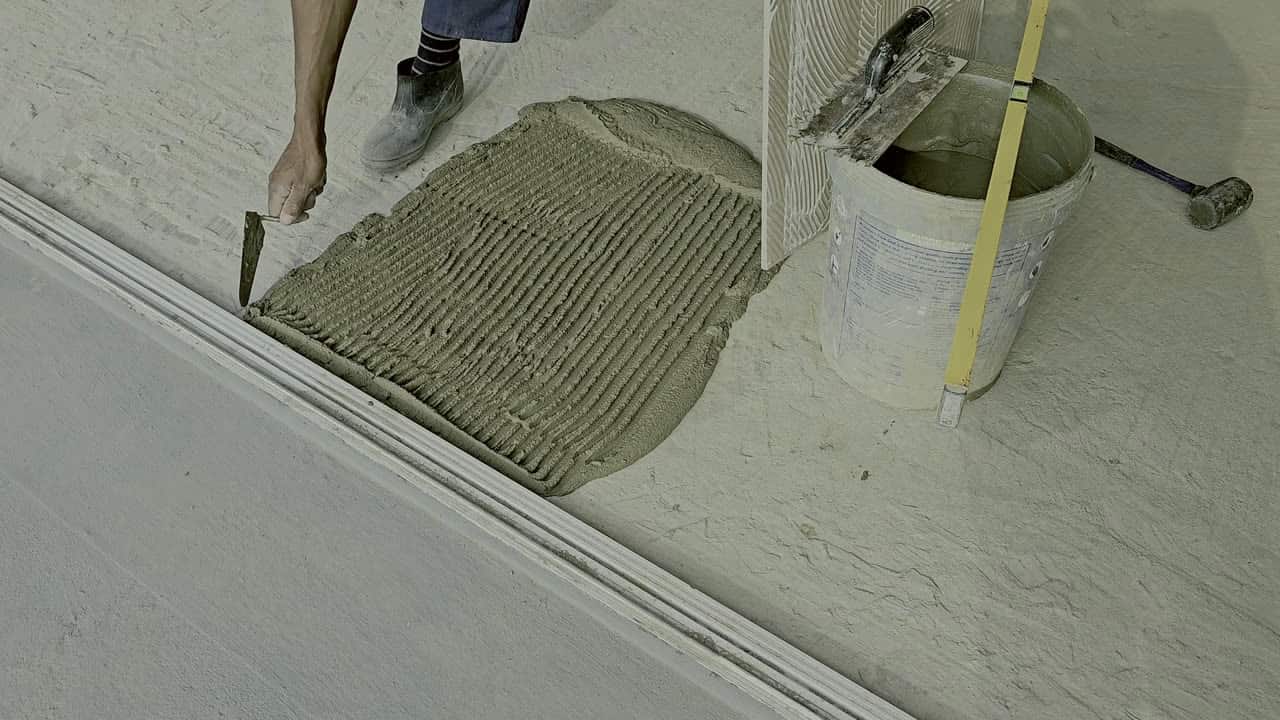
Tile Flooring in Frederick & Central MD
Electric underfloor heating is the cheapest luxury in a Maryland bathroom, and it has to be decided before the tile, not after.
Quick answer
The heating element and thermostat run $12 to $22 per square foot supplied, plus $4 to $9 per square foot of installation labour on a floor that is being tiled anyway. For a typical 40 square foot bathroom that is roughly $650 to $1,250 for the heating itself, with the dedicated electrical circuit a separate $350 to $900 by a licensed electrician. As an add-on to a floor you are already replacing, it is one of the better value upgrades in a bathroom.
The work
An electric heating mat under a tile floor costs a few hundred dollars in materials and a modest amount of labour on a floor that is being tiled anyway, and it changes a cold bathroom more than almost anything else you can buy for the money. The catch is entirely one of sequence: it has to be designed in before the tiling starts, because the mat goes under the tile and the thermostat needs a circuit and a wall box. Deciding you want it after the floor is down means taking the floor up.
The design work is mostly about where the mat does not go. Heating cable is not laid under the bath, the shower base, a vanity, a toilet footprint or any fixed cabinet, partly because there is no point heating a cupboard and partly because trapped heat under something solid is how a mat overheats. So the layout is drawn around the real fixture positions, which means the bathroom plan has to be settled first. The floor sensor goes in a specific place too — between two cable runs, not on top of one — and if it is misplaced the thermostat reads the wrong temperature for the life of the floor.
The other half is electrical. A heating mat wants a dedicated circuit with ground-fault protection, and in most Maryland bathrooms that means a new run back to the panel rather than borrowing an existing one. That is electrician work, and we coordinate it rather than doing it ourselves. We also test the mat's resistance three times — out of the box, after it is laid, and after the tile is down — because a cable nicked by a trowel is invisible and unfixable once it is buried, and knowing which of those three stages broke it is the difference between a warranty claim and an argument.
Maryland electric underfloor heating installed as part of a tile floor. The electrical circuit is by a licensed electrician and quoted separately. Figures assume the floor is being tiled anyway.
Ranges, not quotes. Real numbers come from a walkthrough — access, condition, height and finish level move a price more than square footage does. Estimates are free and in writing.
Get your numberFull heated floor cost guide for MarylandPrefer to just talk?
Call and describe the job. You’ll get a straight answer on whether it’s something we do and roughly what it runs.
(301) 524-1729
Self-performed
Heated tile floors
What’s included
Written into the estimate, not assumed. If something on your job is not on this list, it gets priced and named before anyone starts.
Mat coverage planned against where the bath, shower base, toilet, vanity and any fitted cabinet actually land, with no cable under fixed obstructions. This requires the bathroom layout to be settled first, which is a reason to bring the heating decision forward rather than leaving it as an upgrade.
The dedicated ground-fault-protected circuit and the thermostat box location agreed with the electrician before anything is buried, so the wall box, the conduit for the sensor tail and the panel capacity are all resolved in advance rather than improvised at the end.
Readings taken out of the box, after the mat is laid and again after tiling, recorded and given to you. A cable damaged by a trowel cannot be found later and cannot be repaired, and this is the only way to know which stage it happened at — which is what a warranty claim turns on.
The sensor positioned between cable runs rather than against one, at the right depth, so the thermostat reads the floor rather than reading the cable. A sensor laid carelessly makes the system run cool or cycle badly forever, and nothing about that is adjustable afterwards.
The mat embedded in self-levelling compound or thinset so the cable is fully encapsulated and the surface is flat enough to tile on without the cable telegraphing through. Tiling directly onto a loose mat is the usual reason a heated floor ends up lippy.
The system brought up gradually once the mortar has cured properly, the thermostat programmed with you, and an honest account of what it costs to run — these are a comfort system for a small room, not a way to heat a house, and they work best on a schedule rather than switched on when you notice the floor is cold.
On the job
What the trade looks like at each stage. Photos of our own recent jobs come out at the walkthrough, on the actual house.


Straight answers
Not covered here? Call and ask — you’ll get a real answer, not a “depends on the job”.
For a bathroom-sized area, no. A mat of that size draws roughly what a couple of bright light fittings do, and on a timed schedule — warm for the morning and the evening rather than all day — the running cost in a Maryland bathroom is modest. What it will not do is heat the room as a primary heat source, and a system sized and sold on that basis will disappoint.
Not really, and we would rather say so plainly. The mat goes under the tile, so retrofitting means taking the floor up — at which point you are paying for a new floor to get the heating. If a floor is reaching the end of its life anyway the timing is perfect. If the tile is sound and new, the honest advice is to wait and plan it into the next floor.
Once it is under tile it cannot be repaired, which is why we test resistance out of the box, after the mat is laid and again after tiling, and give you the readings. Those three numbers establish whether a fault came from the factory or from the installation, which determines who puts it right. Any installer who does not test at those stages is asking you to take the risk on their behalf.
Same crew, same visit
Most tile flooring jobs are two or three of these at once, which is why they are priced and scheduled together rather than as separate call-outs.
From the field
Longer answers than a quote page has room for — how the work fails, what putting it right actually involves, and when waiting is the honest call.
Sources worth your time
None of these are ours. They are the offices and standards bodies that set the rules we work to, so you can verify what we say rather than take it.
Publishes the TCNA Handbook, the installation-method standard that tells a tiler which membrane, backer and mortar a wet area actually calls for.
OpenThe attic air-sealing and insulation guidance that actually stops ice dams forming.
OpenWhere the residential-construction standards and material research behind these decisions are published.
Open
Talk to the people doing the work
Tell us what needs doing. We’ll walk it with you, sequence every trade it touches, put the price in writing, and leave you to decide.
Get a quote
Two short steps. No obligation, no pressure — just a clear number and a straight answer about what the job involves.


Tick as many as you like. Most jobs are two or three of them at once, and I sort out the detail when I come and look. Nobody gets turned away for choosing the wrong box.


