Cracks and nail pops
Cracks, nail pops
Read more403 Navaho Dr, Frederick, MD 21701

Finishing in Frederick & Central MD
Outside corners take every suitcase, vacuum cleaner and shoulder in the house. They are also the one detail a decorator cannot hide, because a corner is a straight line your eye checks automatically.
Quick answer
One corner repaired and re-run over its height is $190 to $420, and each additional corner in the same visit drops to $120 to $280 — so if you have four scuffed corners, do them together. A full-height bead replacement is $240 to $520 per corner, and upgrading to a bullnose or impact-resistant bead while we are there adds $60 to $140. Archways and curved beads are their own job at $320 to $700.
The work
Behind every finished outside corner in a drywall house there is a bead — a strip of metal, vinyl or paper-faced metal that gives the corner a hard, straight edge and something for the compound to run off. When a corner gets hit, the damage is almost always the bead rather than the board: the metal dents and springs back slightly, breaking its bond with the compound over it, and you get a crack running along the corner or a chip that keeps growing every time something brushes past.
The repair that fails is filling the chip. Compound has nothing to hold on to over a bead that has lost its bond, and the new filling cracks off along the same line within months. The repair that works is to cut the damaged section of bead out cleanly, fasten a new piece in, and then re-run the corner in three coats so the straight line is restored over a length rather than patched at a point. A corner is judged along its whole height, which is why a six-inch patch in the middle of one is so obvious.
We also take a view on what the corner should be made of. Standard galvanised bead is what most houses have and it is fine. In a hallway, a mudroom, a stairwell or anywhere a house with children and dogs lives hard, we will suggest a heavier bullnose or an impact-resistant bead instead, because replacing the same corner every three years is a worse deal than upgrading it once.
Priced per corner, because that is the unit of work — a corner gets repaired over its full height whether the damage is six inches or six feet.
Ranges, not quotes. Real numbers come from a walkthrough — access, condition, height and finish level move a price more than square footage does. Estimates are free and in writing.
Get your numberFull corner bead cost guide for MarylandPrefer to just talk?
Call and describe the job. You’ll get a straight answer on whether it’s something we do and roughly what it runs.
(301) 524-1729
Self-performed
Corner bead repair
What’s included
Written into the estimate, not assumed. If something on your job is not on this list, it gets priced and named before anyone starts.
Dented sections removed cleanly back to sound bead. Compound over a bead that has lost its bond cracks off along the same line within a few months, every time.
Fixed at the right spacing with the right fasteners and the joint between old and new bead staggered, so the corner is one continuous straight edge rather than two pieces meeting.
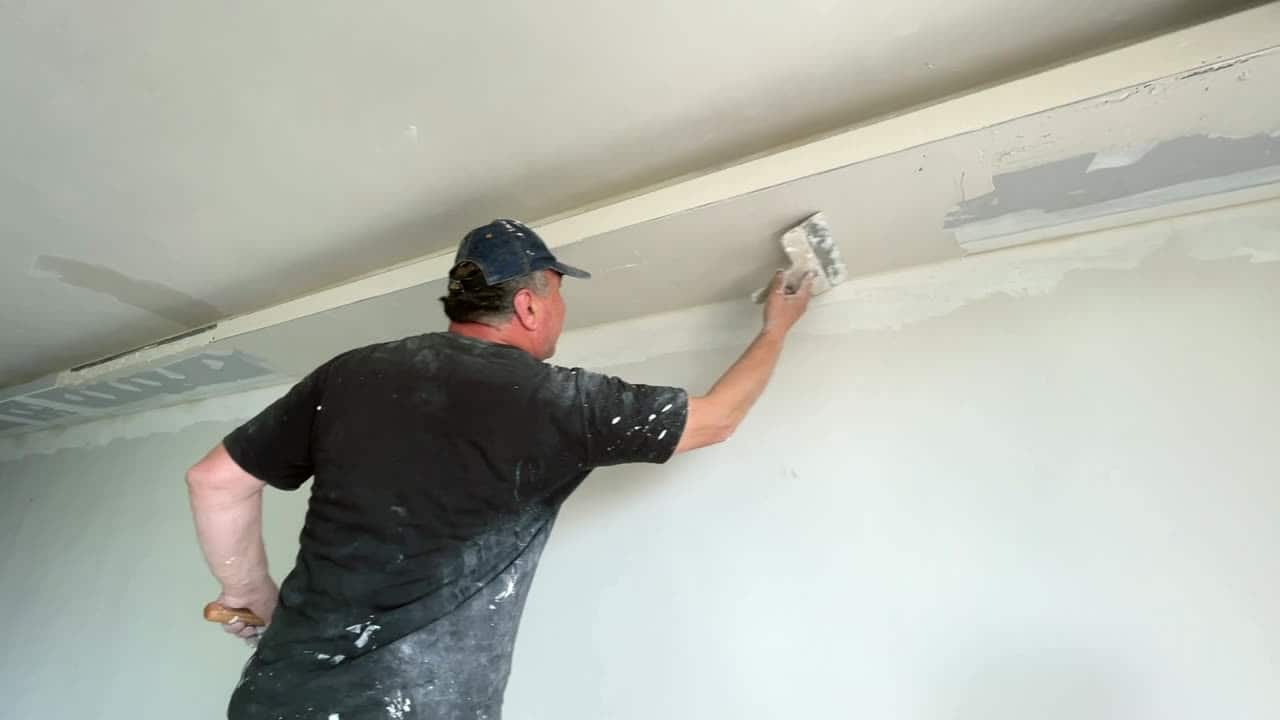
Three coats worked along the full height of the corner, not feathered around a six-inch patch. A corner reads as a line, so the repair has to be done as a line.
Checked with a straight edge before the final coat. A corner that is a sixteenth out is invisible in a photograph and obvious to anyone walking down the hall past it.
Bullnose or impact-resistant bead offered for hallways, stairwells, mudrooms and garage entries. Upgrading a corner once beats repairing the same one every three years.
Texture matched into the surrounding wall and the repair primed, because fresh compound on a corner flashes badly under the side lighting corners usually get.
On the job
What the trade looks like at each stage. Photos of our own recent jobs come out at the walkthrough, on the actual house.


Straight answers
Not covered here? Call and ask — you’ll get a real answer, not a “depends on the job”.
Because the bead under it has lost its bond and the repair only addressed the compound. A knock dents the metal and it springs back slightly, which breaks the grip between bead and compound along the whole hit. Filling the visible crack puts new compound on an unstable base, and it lets go along the same line within a few months. The damaged section of bead has to come out and be replaced for the repair to hold.
We replace just the damaged section of bead, but we re-run the finish over the corner's full height, and that is deliberate. A corner is a straight line that your eye checks without being asked to, so a perfectly executed patch in the middle of one still reads as a patch. Doing the whole length costs very little more in a repair that is already set up and makes the difference between invisible and almost invisible.
In the places that actually get hit, yes. Hallways, stairwells, garage entries, mudrooms and anywhere a vacuum cleaner turns a corner are worth a bullnose or an impact-resistant bead — $60 to $140 extra per corner against repairing the same corner every few years. In a dining room that nobody touches, standard galvanised bead is perfectly adequate and we will not sell you anything else.
Same crew, same visit
Most finishing jobs are two or three of these at once, which is why they are priced and scheduled together rather than as separate call-outs.
From the field
Longer answers than a quote page has room for — how the work fails, what putting it right actually involves, and when waiting is the honest call.
Sources worth your time
None of these are ours. They are the offices and standards bodies that set the rules we work to, so you can verify what we say rather than take it.
Check any Maryland contractor's licence before you sign. Ours is on file with the Commission.
OpenWhere the residential-construction standards and material research behind these decisions are published.
OpenThe county office that decides whether your job needs a permit. Routine gutter work does not; structural and roof work usually does.
Open
Talk to the people doing the work
Tell us what needs doing. We’ll walk it with you, sequence every trade it touches, put the price in writing, and leave you to decide.
Get a quote
Two short steps. No obligation, no pressure — just a clear number and a straight answer about what the job involves.


Tick as many as you like. Most jobs are two or three of them at once, and I sort out the detail when I come and look. Nobody gets turned away for choosing the wrong box.


