Drywall repair
Drywall repair
Read more403 Navaho Dr, Frederick, MD 21701

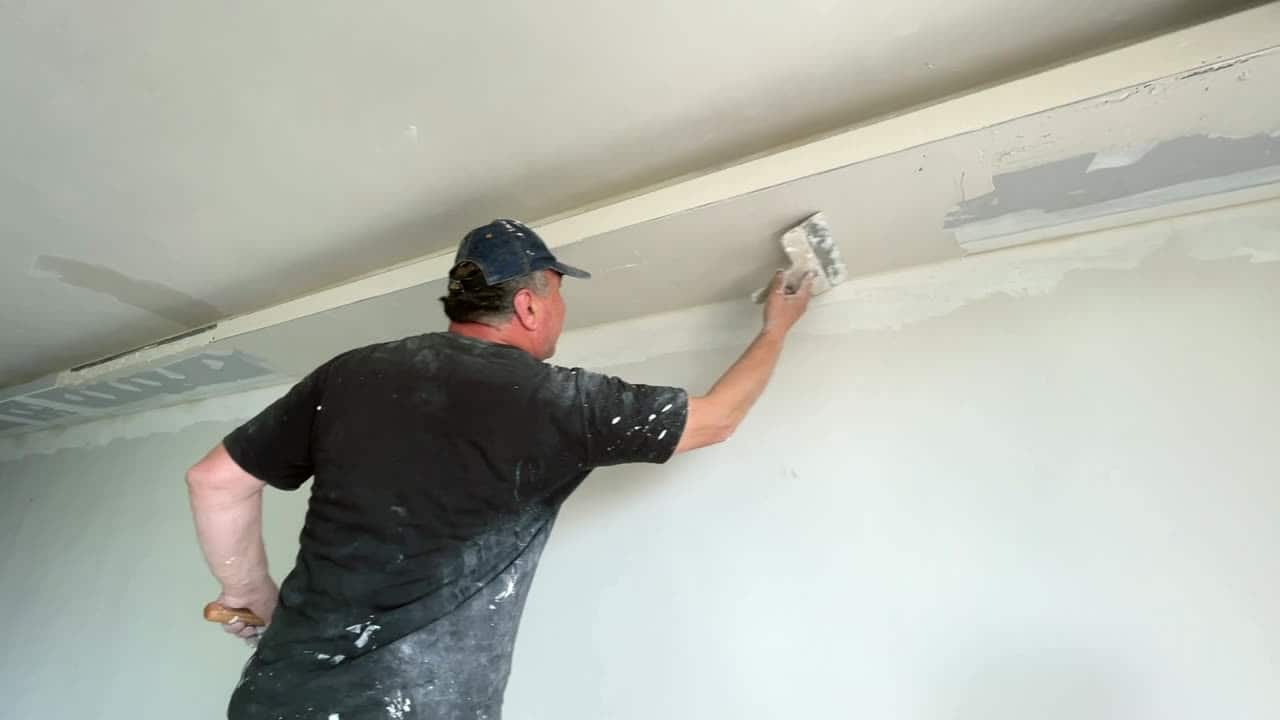
Finishing in Frederick & Central MD
Pulling the paper off is a weekend. Getting the adhesive off, repairing the torn paper face underneath, and leaving a wall that takes paint evenly is the part people call us about.
Quick answer
A clean strip and wash is $1.20 to $2.40 per square foot of wall. Where the paper was hung on unprimed drywall and takes the board face with it, it is $2.20 to $4.00, because that wall now needs a skim coat. A typical 12 by 12 room works out at $780 to $1,900 all in. We do a test patch before quoting so the number you get is based on what is actually behind your paper.
The work
Wallpaper removal looks like a demolition job and finishes like a finishing job. Steaming or scoring and stripping the paper is the straightforward half. What is underneath decides the price: a wall that was primed before papering comes clean, and a wall that was papered straight onto bare drywall gives up its paper face along with the paper, which means a skim coat across the whole wall before anything can be painted.
The adhesive matters more than most people expect. Old paste left on the wall is water-soluble, which means latex paint rolled over it re-wets it and you get bubbling, streaking and a finish that will not cure properly. So the sequence is strip, then wash the adhesive off completely, then let the wall dry, then skim what needs skimming, then prime. Skipping the wash is the single most common reason a repainted room looks wrong a month later.
On houses built before 1978 there is a legal layer too. Disturbing painted surfaces in those houses falls under the EPA's Renovation, Repair and Painting rule, and papered walls in older Frederick houses frequently have painted plaster or painted drywall underneath. We work to those containment rules as a matter of course rather than as an upsell, and we will tell you up front when your house is in that bracket.
Priced per square foot of wall, and the spread is almost entirely about what is underneath the paper. We find that out with a test patch before quoting, not after starting.
Ranges, not quotes. Real numbers come from a walkthrough — access, condition, height and finish level move a price more than square footage does. Estimates are free and in writing.
Get your numberFull wallpaper removal cost guide for MarylandPrefer to just talk?
Call and describe the job. You’ll get a straight answer on whether it’s something we do and roughly what it runs.
(301) 524-1729
Self-performed
Wallpaper removal
What’s included
Written into the estimate, not assumed. If something on your job is not on this list, it gets priced and named before anyone starts.
One small area stripped first to see what is underneath. Paper over primed drywall comes off cleanly, paper over bare board does not, and that difference changes the price substantially.
Scored and softened so the paper releases rather than being dragged off. Brute force tears the paper face of the drywall, which turns a strip job into a skim job.
Old paste is water-soluble, so paint rolled over it re-wets it and bubbles. Walls get washed down and allowed to dry properly before anything else happens.
Where the drywall face has lifted, the wall gets a skim coat and sanding rather than spot filling. Spot-filled lifted paper reads as a rippled wall under a roller finish.
Pre-1978 houses get containment, wet methods and clean-up to the EPA RRP standard. We will tell you if your house is in that bracket before we start, not after.
A sealing primer over the finished wall, because stripped and skimmed surfaces drink paint unevenly. We can paint it in the same visit if you want it finished.
On the job
What the trade looks like at each stage. Photos of our own recent jobs come out at the walkthrough, on the actual house.


Straight answers
Not covered here? Call and ask — you’ll get a real answer, not a “depends on the job”.
Sometimes, and we will say so when it is the sensible option — tight, well-adhered paper with no seams lifting can be sealed with an oil-based or shellac primer and painted. But the seams usually telegraph through, the texture stays visible, and anything that lifts later takes your new paint with it. On patterned or vinyl paper it is a false economy. We quote both ways when it is a genuine choice.
Because the paper was hung on bare drywall. Unprimed board bonds to wallpaper paste better than the board's own paper face bonds to the gypsum behind it, so the paper comes off and brings that face with it in patches. You are left with a wall of exposed gypsum and ragged edges, which cannot be spot-filled invisibly. A skim coat across the whole wall is the only finish that comes out flat.
A clean strip in one room is usually a day to a day and a half including the wash and the primer. If the wall needs skimming add a day for the coats and drying. We work room by room in occupied houses, and we keep the water and the steam contained — stripping wallpaper is wet work and the floors get covered before any of it starts.
Same crew, same visit
Most finishing jobs are two or three of these at once, which is why they are priced and scheduled together rather than as separate call-outs.
From the field
Longer answers than a quote page has room for — how the work fails, what putting it right actually involves, and when waiting is the honest call.
Sources worth your time
None of these are ours. They are the offices and standards bodies that set the rules we work to, so you can verify what we say rather than take it.
Any house built before 1978 has lead rules attached to disturbing paint. This is the rule itself.
OpenCheck any Maryland contractor's licence before you sign. Ours is on file with the Commission.
OpenWhere the residential-construction standards and material research behind these decisions are published.
Open
Talk to the people doing the work
Tell us what needs doing. We’ll walk it with you, sequence every trade it touches, put the price in writing, and leave you to decide.
Get a quote
Two short steps. No obligation, no pressure — just a clear number and a straight answer about what the job involves.


Tick as many as you like. Most jobs are two or three of them at once, and I sort out the detail when I come and look. Nobody gets turned away for choosing the wrong box.


