Metal stud basement framing
Basement framing
Read more403 Navaho Dr, Frederick, MD 21701

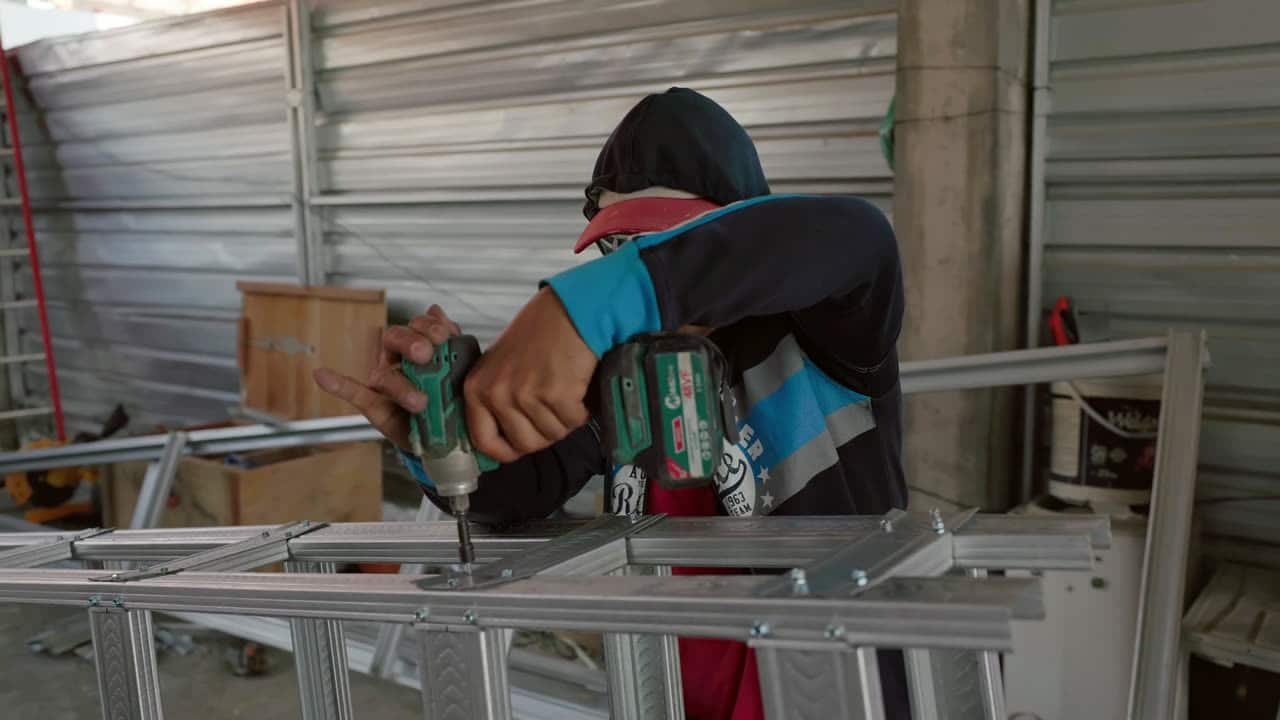
Metal Framing in Frederick & Central MD
When framing and drywall are two companies, the gap between them is where the arguments live.
Quick answer
Usually, and not because either trade is discounted. It is cheaper because nobody prices remedial time. When two firms are involved, the drywall quote carries a contingency for whatever the framing turns out to be, and that contingency is spent whether it was needed or not. One scope removes it, and it removes the second mobilisation as well.
The work
This page exists because people search for the two trades together, and what they are really asking is whether one firm will take both. The answer is yes, and it is worth explaining why that is not just a convenience. Framing and drywall are one continuous decision split across two trades, and almost every drywall problem that gets blamed on the finisher was decided at framing stage by somebody who was not going to be there when the board went on.
Stud layout is the clearest example. A sheet of board is a fixed width, and if the studs do not run on a consistent center from a deliberate starting point, the hanger spends the day cutting sheets to land on framing and the wall ends up with more butt joints than it needed. Every one of those joints is a place a seam can show in raking light. A framer who is also the hanger sets the first stud where the board wants it, because they are the one who has to deal with the consequence.
Then there is everything that has to be decided before the wall closes and cannot be decided afterwards: blocking at every heavy fixing, backing at internal corners so the board has something to land on, protection where cable passes through steel, board thickness chosen against stud spacing, and knowing which walls are getting a level-five finish so the framing under them is held to a tighter tolerance. When one crew owns both, none of that is a handover — it is the same person making the same decision twice, and there is nobody to point at if it is wrong.
Light-gauge steel framing with drywall, tape and finish in Maryland, labour and materials, as a combined scope. The combined figure is normally below the sum of two separately procured trades because there is no remedial time between them.
Ranges, not quotes. Real numbers come from a walkthrough — access, condition, height and finish level move a price more than square footage does. Estimates are free and in writing.
Get your numberFull framing & drywall cost guide for MarylandPrefer to just talk?
Call and describe the job. You’ll get a straight answer on whether it’s something we do and roughly what it runs.
(301) 524-1729
Self-performed
Metal framing and drywall together
What’s included
Written into the estimate, not assumed. If something on your job is not on this list, it gets priced and named before anyone starts.
Studs run on a consistent center from a start point chosen so sheets land on framing at both edges, which reduces butt joints, reduces waste and reduces the number of places a seam can show later.
Backing set at every fixing, internal corner and board edge that needs it, by the person who will be hanging into it. Nothing gets missed in the handover because there is no handover.
Thickness and type chosen for the stud spacing and the room — five-eighths where flatness or sound matters, moisture-resistant board in wet areas, and the framing held tighter where a level-five finish is going on.
Grommets in the knockouts before wire goes through and protective plates where cable passes close to a face, so a screw cannot find a cable and a cable is not resting on a cut steel edge.
Framing, board, tape and finish quoted as one package to one specification, which removes the commonest cost surprise on this work: the second trade pricing remedial time to fix the first trade's tolerances.
If a seam shows or a wall reads unflat, there is no question of whose work it was. That accountability is the actual product here and it is why people search for the two trades in one phrase.
On the job
What the trade looks like at each stage. Photos of our own recent jobs come out at the walkthrough, on the actual house.


Straight answers
Not covered here? Call and ask — you’ll get a real answer, not a “depends on the job”.
Three things, repeatedly. Stud centers that do not suit the board, so there are more butt joints than necessary. Missing blocking discovered after the wall is closed. And tolerances that were fine for the framer and not fine for the finish being applied. None of them are anybody acting in bad faith — they are the predictable result of the person making the decision not being the person living with it.
Yes. Framing, hanging, taping and finishing to the level agreed are all in scope, and the finish level is specified rather than assumed — a basement utility wall and a feature wall in raking light want different work and should not be quoted as the same thing. We will tell you which level we are proposing where.
Yes, and we do it often, but we will measure it first and tell you what we find. Where the existing framing is within tolerance we board it as it is. Where it is not, we will price the correction separately and visibly rather than absorbing it quietly or boarding over it and letting the finish carry the blame.
Same crew, same visit
Most metal framing jobs are two or three of these at once, which is why they are priced and scheduled together rather than as separate call-outs.
From the field
Longer answers than a quote page has room for — how the work fails, what putting it right actually involves, and when waiting is the honest call.
Sources worth your time
None of these are ours. They are the offices and standards bodies that set the rules we work to, so you can verify what we say rather than take it.
Where the residential-construction standards and material research behind these decisions are published.
OpenCheck any Maryland contractor's licence before you sign. Ours is on file with the Commission.
OpenThe county office that decides whether your job needs a permit. Routine gutter work does not; structural and roof work usually does.
Open
Talk to the people doing the work
Tell us what needs doing. We’ll walk it with you, sequence every trade it touches, put the price in writing, and leave you to decide.
Get a quote
Two short steps. No obligation, no pressure — just a clear number and a straight answer about what the job involves.


Tick as many as you like. Most jobs are two or three of them at once, and I sort out the detail when I come and look. Nobody gets turned away for choosing the wrong box.


